
What should I know about my home’s heating oil tank to keep it safe, properly maintained, and ready while I’m away?
What should I know about my home’s heating oil tank to keep it safe, properly maintained, and ready while I’m away? Learn to prevent leaks and failures.
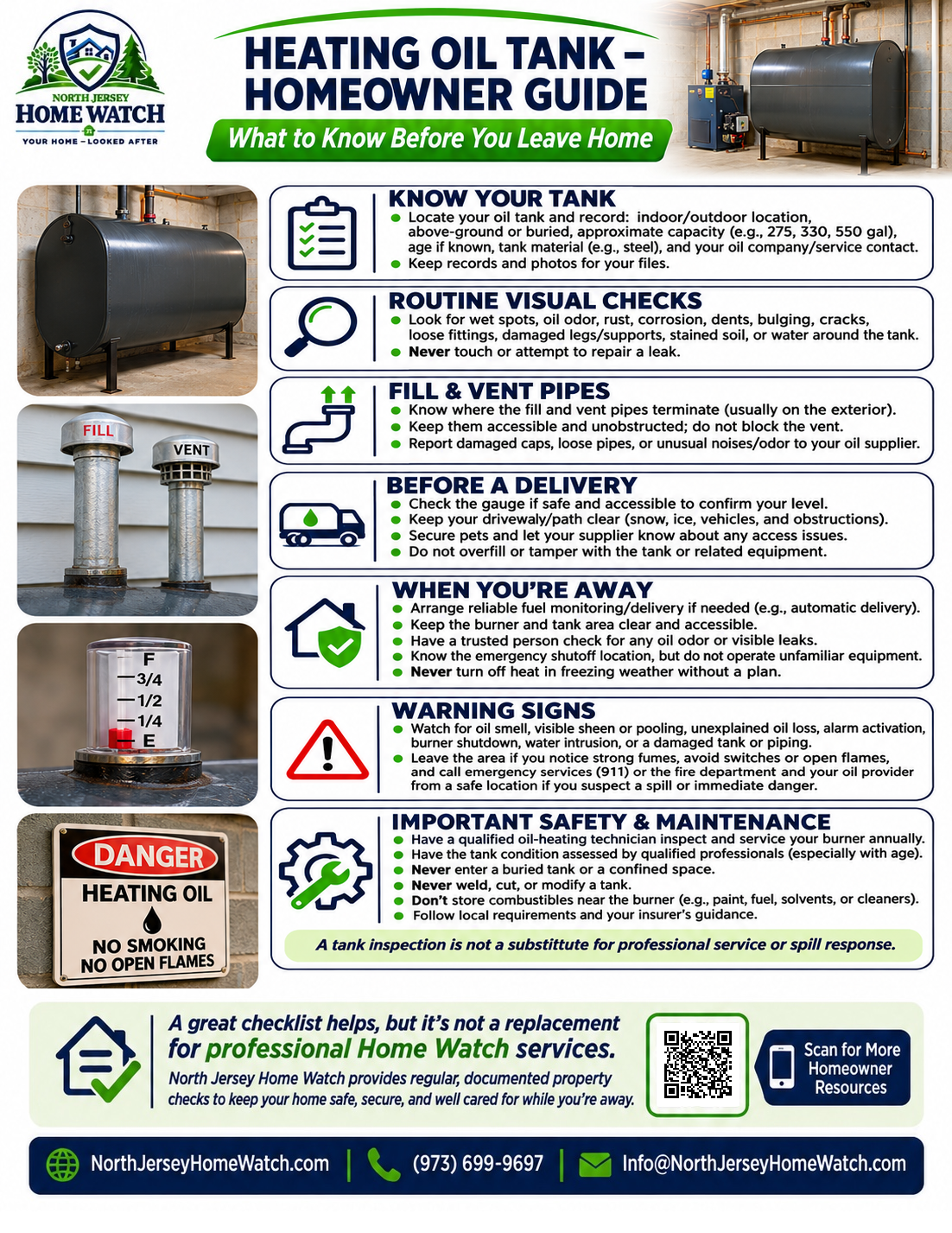
Winter in North New Jersey brings a unique set of challenges for homeowners, especially those who head south or travel frequently during the colder months. When the temperature drops, your heating system becomes the most critical component of your property’s infrastructure. For many residents in our area, that system relies on a heating oil tank. If you are preparing to leave your residence for an extended period, you might be asking: What should I know about my home’s heating oil tank to keep it safe, properly maintained, and ready while I’m away? Ignoring this system can lead to catastrophic consequences, ranging from frozen pipes due to a run-out to the environmental nightmare of an oil leak.
At North Jersey Home Watch, I see firsthand how a lack of preparation can turn a peaceful vacation into a logistical crisis. A heating oil tank is not a 'set it and forget it' appliance. It requires active management, particularly when nobody is home to smell a faint odor of fuel or hear the burner struggling to ignite. Protecting your home starts with understanding the risks and implementing a rigorous maintenance schedule before you lock the door.
Know Your Tank: The Foundation of Safety
You cannot protect what you do not understand. The first step in home safety is a thorough audit of your fuel storage system. What should I know about my home’s heating oil tank to keep it safe, properly maintained, and ready while I’m away? You need to start with the basics: location, age, and capacity. In North New Jersey, tanks are typically found in one of three places: the basement, the garage, or buried underground. Basement tanks are the easiest to monitor, as they are protected from the elements, but they still require a keen eye for corrosion.
Age is the most significant risk factor for tank failure. Most steel tanks have a lifespan of roughly 20 to 25 years. If your tank is approaching this milestone, it is a ticking time bomb. Internal corrosion often happens from the inside out due to condensation and sediment buildup, meaning a tank can look perfectly fine on the exterior while being paper-thin on the bottom. Capacity is equally important. Knowing whether you have a standard 275-gallon tank or a larger unit allows you to calculate exactly how long a full load will last based on your thermostat’s 'away' setting.
Preventing Problems Through Early Recognition
Recognizing the early warning signs of a failing tank can save you thousands of dollars in remediation costs. Before you depart, perform a visual inspection. Look for 'weeping' or damp spots on the surface of the tank, particularly along the bottom seam. Check the legs of the tank for stability; a full 275-gallon tank weighs over 2,000 pounds, and shifting soil or a cracked basement floor can lead to a structural collapse. Look for signs of rust or bubbling paint, which often indicate that moisture has compromised the metal.
Beyond the tank itself, inspect the fuel lines. These copper lines carry the oil to your burner. In older homes across North New Jersey, these lines may be encased in concrete or run along the floor where they are susceptible to physical damage. If you notice any oily residue around the fittings or filters, call a technician immediately. These small drips become major leaks when the system is under the strain of a cold snap while you are hundreds of miles away.
The Critical Importance of Fuel Levels
One of the most common causes of heating failure during the winter is simply running out of oil. When a tank runs dry, the burner will shut down, and without a heat source, your home’s interior temperature will plummet. In the climate of North New Jersey, this leads to frozen pipes and water damage within 48 to 72 hours. Furthermore, letting a tank run too low can pull sludge and sediment into the fuel lines, clogging the filter and requiring a professional service call to restart the system.
I recommend never letting your tank fall below a quarter full while you are away. Ideally, you should fill the tank right before departure. A full tank leaves less room for air, which reduces the amount of condensation that can form on the interior walls. This moisture is the primary cause of internal rusting and bacterial growth in the fuel. For those away for months, setting up automatic delivery with a local provider is essential, but it is not a complete substitute for physical monitoring. Mechanical gauges can freeze or get stuck, giving a false reading of a full tank when it is actually empty.
Professional Oversight and Monitoring
Technology offers some help, such as smart oil gauges that send alerts to your phone, but these devices can fail if the Wi-Fi goes out or the battery dies. This is where professional home watch services become invaluable. A professional can provide a physical check of the gauge, look for leaks on the floor, and ensure the burner is operating correctly. During our visits, we check the perimeter of the tank for odors and verify that the heat is reaching the desired 'away' temperature throughout the house.
When you ask, "What should I know about my home’s heating oil tank to keep it safe, properly maintained, and ready while I’m away?" the answer must include a plan for emergencies. Ensure your oil provider has a key or code to access the fill pipe, and make sure your home watch professional has the contact information for your preferred HVAC technician. If a leak is detected, every minute matters. An oil spill in a basement is not just a mess; it is an environmental hazard that can require soil excavation and the involvement of the Department of Environmental Protection.
Seasonal Maintenance and Additives
If your tank is located outdoors or in an unheated garage, the oil itself can become a liability. In extreme North New Jersey cold, heating oil can undergo 'gelling.' This is when the paraffin wax in the fuel crystallizes, thickening the oil until it can no longer flow through the filter or lines. If your tank is exposed to the elements, ask your fuel provider about adding an anti-gel treatment during your pre-departure fill. This simple step ensures the fuel remains liquid even when temperatures drop into the single digits.
Additionally, an annual professional tune-up is non-negotiable. A technician should replace the oil filter, clean the burner nozzle, and inspect the flue pipe. A clean burner is an efficient burner. If the system is carboned up or the nozzle is partially clogged, it will burn more fuel to produce the same amount of heat, potentially exhausting your oil supply much faster than you anticipated. This maintenance should be scheduled in the early autumn to ensure the system is at peak performance before the first frost arrives.
Securing the Fill and Vent Pipes
Finally, do not forget the exterior of your home. The fill pipe, where the delivery driver connects the hose, and the vent pipe, which allows air to escape the tank, must be kept clear. If a heavy North Jersey snowstorm buries these pipes, the delivery driver may not be able to find them, leading to a missed delivery and a potential run-out. Ensure these pipes are clearly marked or shoveled out. Also, check that the vent alarm—the whistling sound the tank makes when being filled—is functional. If the vent is blocked by a bird's nest or debris, the tank can over-pressurize during a fill, leading to a catastrophic rupture.
Leaving your home for a season requires more than just locking the front door. It requires a comprehensive strategy for your mechanical systems. By understanding the age and condition of your tank, maintaining adequate fuel levels, and employing local experts to keep an eye on things, you can enjoy your time away without the looming fear of a heating disaster. Preparation is the only way to guarantee that your home remains safe, warm, and intact for your return.
If you want to ensure your property is being monitored by professionals who know exactly what to look for, I am here to help. I provide the boots-on-the-ground presence necessary to catch small issues before they become major expenses. Please schedule a consultation today to discuss a customized plan for your North New Jersey home.
Have more questions? View our full FAQ page
Questions, answered.
How often should I have my heating oil tank inspected?
You should perform a visual inspection yourself every month, looking for rust, dents, or wet spots. Additionally, a professional HVAC technician should conduct a thorough inspection and system tune-up annually, ideally before the winter heating season begins in North New Jersey. If your tank is over 20 years old, more frequent professional monitoring is highly recommended to detect internal corrosion.
What is the ideal thermostat setting when I am away for the winter?
We generally recommend setting your thermostat no lower than 55 degrees Fahrenheit. This temperature provides enough of a buffer to prevent pipes from freezing in interior walls during extreme cold snaps. Setting it lower may save a small amount of fuel but significantly increases the risk of water damage if the heating system struggles or if a cold front moves in.
Can I use a smart sensor to monitor my oil levels remotely?
Yes, smart ultrasonic oil gauges are excellent tools that provide real-time data to your smartphone. However, they should not be your only line of defense. These devices can fail due to power outages or Wi-Fi connectivity issues. A physical check by a home watch professional remains the most reliable way to verify actual fuel levels and ensure no leaks have occurred.