
What should I do with my water softener before leaving home, while I'm away, and when I return to ensure it operates properly?
Wondering what should I do with my water softener before leaving home, while I'm away, and when I return to ensure it operates properly? Learn our expert tips.
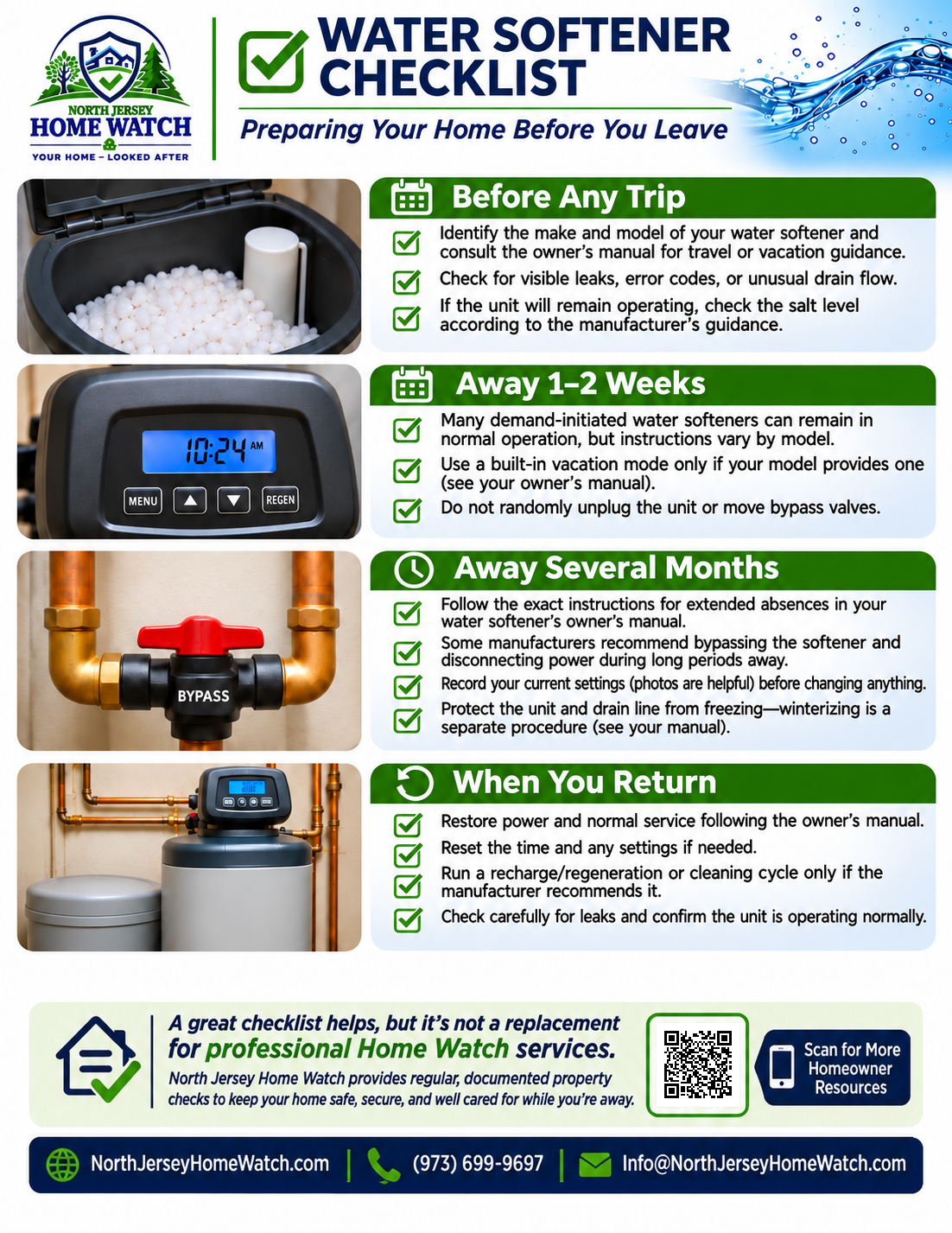
For many homeowners in North New Jersey, a water softener is not a luxury—it is a necessity. Our local groundwater often carries a heavy mineral load that can wreak havoc on plumbing, appliances, and skin. When you are preparing for a getaway, whether it is a long weekend at the Shore or a winter in Florida, your mechanical systems require specific attention to remain in peak condition. A common question I receive from our clients is: What should I do with my water softener before leaving home, while I'm away, and when I return to ensure it operates properly?
Leaving a water softener unattended without proper preparation can lead to salt bridging, mechanical failure, or even interior flooding if a valve malfunctions. Because these systems rely on a combination of electricity, water pressure, and chemical exchange, they are susceptible to issues when the normal flow of water stops. I have seen firsthand how a small oversight in the utility room can lead to a major headache for a returning homeowner. By following a structured protocol, you can ensure your system remains a benefit rather than a liability.
The Pre Departure Inspection Routine
Your preparation should begin at least forty-eight hours before you lock the door. Start with the salt tank, often called the brine tank. You do not want the salt level to be too low, as the system needs salt to regenerate, but you also should avoid overfilling it if you are leaving for several months. High humidity in North New Jersey can cause salt to clump together, forming a hard crust known as a salt bridge. This bridge prevents the brine solution from reaching the resin, meaning your water will not be softened even if the machine is running. Ensure your salt level is roughly half-full and break up any visible clumps with a broom handle.
Next, perform a visual inspection for leaks around the bypass valve and the drain line. A slow drip can become a steady stream over several weeks. Check the control head for any active error codes. If you see a flashing light or a specific error number, it is better to call a technician now than to let the motor struggle while you are gone. Listen to the unit as well. If you hear water constantly running into the floor drain or standpipe, your softener may be stuck in a regeneration cycle. This will waste thousands of gallons of water and significantly spike your utility bill.
Finally, verify the clock settings. If North New Jersey experienced a recent power surge or outage, your softener’s internal timer might be off. Most systems are set to regenerate at 2:00 AM when water usage is zero. If the clock is wrong, it might try to regenerate while your professional home watch services provider is performing an inspection or, worse, while you are using the water immediately upon your return. Ensuring the schedule is accurate is a foundational step in answering what should I do with my water softener before leaving home, while I'm away, and when I return to ensure it operates properly?
Managing the System During Short Absences
For short trips of a week or less, most North New Jersey homeowners can leave their water softeners in normal operating mode. Since modern units are demand-initiated, they only regenerate after a certain volume of water has passed through the resin bed. If no one is home and no faucets are running, the system simply waits. It is a common misconception that the machine will continue to cycle through salt every night. As long as there are no leaks in your home, the softener will remain idle.
However, if you have an older timer-based model that regenerates every few days regardless of usage, you might consider bypassing it. You can do this by turning the bypass valve located at the back of the unit. This allows water to flow through the house pipes without entering the softener. While this prevents salt waste, it also means any water used by an irrigation system or a neighbor watering your plants will be hard water. For most, leaving a modern unit on is the safest bet for short durations.
Strategic Shutdowns for Extended Absences
If you are leaving North New Jersey for a month or longer, the strategy changes. Stagnant water sitting in a softener resin tank for months can occasionally develop a flat or metallic taste, and in rare cases, bacterial growth. For these long-term absences, we generally recommend two options: the bypass method or the power-down method.
Bypassing the unit is the most common choice. By engaging the bypass valve, you isolate the softener from your home’s plumbing. Once bypassed, you can unplug the unit from the electrical outlet. This protects the control head from power surges, which are frequent during North New Jersey summer storms. If you choose this route, you must ensure the unit is not left in a state where water is trapped under pressure for months. Some experts suggest manually triggering a regeneration cycle just before you leave, then bypassing it once the cycle is complete, ensuring the resin is clean and charged.
What to Do When You Return Home
When you return to your North New Jersey residence, your first instinct might be to jump in the shower, but your water softener needs a moment to catch up. If you bypassed the system, start by slowly turning the valves back to the "service" position. Do not flip them open rapidly; a sudden surge of pressure can dislodge sediment or damage the internal seals of the control valve. Once the water is flowing through the unit again, check the salt level immediately. Condensation may have formed in the tank during your absence, so look for any signs of salt mushing at the bottom.
Even if you left the system on, it is wise to manually initiate a regeneration cycle as soon as you get home. This flushes out the resin bed and ensures that the first gallon of water you use for cooking or bathing is fully softened and fresh. To do this, press and hold the "Regen" or "Clean" button on your control panel until the motor engages. This process usually takes about 90 to 120 minutes. During this time, try to avoid using large amounts of water elsewhere in the house, as the water pressure will be diverted to the softener.
After the regeneration cycle finishes, go to the highest faucet in your home—usually a second-floor bathtub—and run the cold water for five minutes. Then, do the same with the hot water. This clears out any air pockets or stale water that settled in the pipes while you were away. By following these steps, you are successfully closing the loop on the question: What should I do with my water softener before leaving home, while I'm away, and when I return to ensure it operates properly?
The Importance of Professional Monitoring
In North New Jersey, home maintenance is often a matter of preventing small issues from escalating. A water softener is a prime example of a system that works silently until it doesn't. Having a dedicated professional walk through your home while you are away adds a layer of security that a camera or a smart sensor cannot provide.
I understand that your home is your most significant investment. Whether it is managing the nuances of a water filtration system or ensuring your HVAC is handling the Jersey humidity, the goal is always the same: peace of mind. When you follow a consistent plan regarding what should I do with my water softener before leaving home, while I'm away, and when I return to ensure it operates properly?, you eliminate the guesswork and protect your plumbing infrastructure for the long haul.
Don't let the technical details of home maintenance keep you from enjoying your time away from North New Jersey. If you want to ensure every system in your house—from the water softener to the sump pump—is being watched by experts, we are here to help. Reach out to me today to schedule a consultation and learn how I can customize a plan for your property.
Have more questions? View our full FAQ page
Questions, answered.
Should I unplug my water softener before a long vacation?
If you are leaving for more than two weeks, it is often safer to bypass the unit and unplug it to protect the electronics from power surges. However, for shorter trips, leaving it plugged in is fine, as modern demand-initiated systems will stay idle if no water is being consumed in the home.
How do I prevent a salt bridge while I am away from home?
To prevent a salt bridge, avoid overfilling your brine tank before departure. Aim for the tank to be about half-full. Also, ensure your utility room remains relatively cool and dry, as high humidity is the primary cause of salt clumping and bridging in North New Jersey homes.
Why does my water smell strange when I return from vacation?
If water sits stagnant in the softener’s resin tank for an extended period, it can develop a stale odor. This is why we recommend manually triggering a regeneration cycle immediately upon your return. Flushing the system and running your faucets for several minutes will typically resolve any odor or taste issues.