What should I do with my hot water heater and plumbing system before leaving my home for an extended period, and what steps should I take to safely prepare everything when I return?
What should I do with my hot water heater and plumbing system before leaving my home for an extended period, and what steps should I take to safely prepare
Leaving a home unattended in North New Jersey involves more than just locking the front door and setting the alarm. Whether you are heading south for the winter or escaping for a month-long summer retreat, your home's mechanical systems require specific attention to prevent property damage and health risks. Many clients ask me: What should I do with my hot water heater and plumbing system before leaving my home for an extended period, and what steps should I take to safely prepare everything when I return? Addressing these concerns properly is the difference between a relaxing homecoming and a costly emergency restoration project.
In our region, temperature fluctuations and water quality can lead to unique challenges like frozen pipes in the winter or sediment buildup in the summer. We have seen firsthand how a small drip can turn into a structural disaster when a homeowner fails to secure their main line. This guide provides a professional framework for managing your plumbing and water heating systems, ensuring your property remains secure while you are away and safe when you walk back through the door.
Securing the Main Water Supply
The single most effective way to prevent catastrophic water damage is to shut off the main water supply to the house. If a pipe bursts or a supply line to a toilet or refrigerator fails while you are gone, an open main valve will continue to pump hundreds of gallons of water into your home until someone notices. This leads to mold, ruined flooring, and structural issues. Before you leave, locate your main shut-off valve—usually found near the water meter or where the main line enters the basement—and turn it to the off position.
Once the water is off, open the faucets at the highest and lowest points of the house. This relieves pressure within the system and allows much of the standing water to drain out. This is particularly vital in North New Jersey during the colder months, as it reduces the volume of water available to freeze and expand within the pipes. If your home uses a boiler for heat, consult with a professional before shutting the main water off, as some systems require a constant supply to maintain pressure. For homes with fire sprinkler systems, ensure the main supply to the sprinklers remains active even if the domestic supply is cut.
Managing the Hot Water Heater: Vacation Mode vs Shutdown
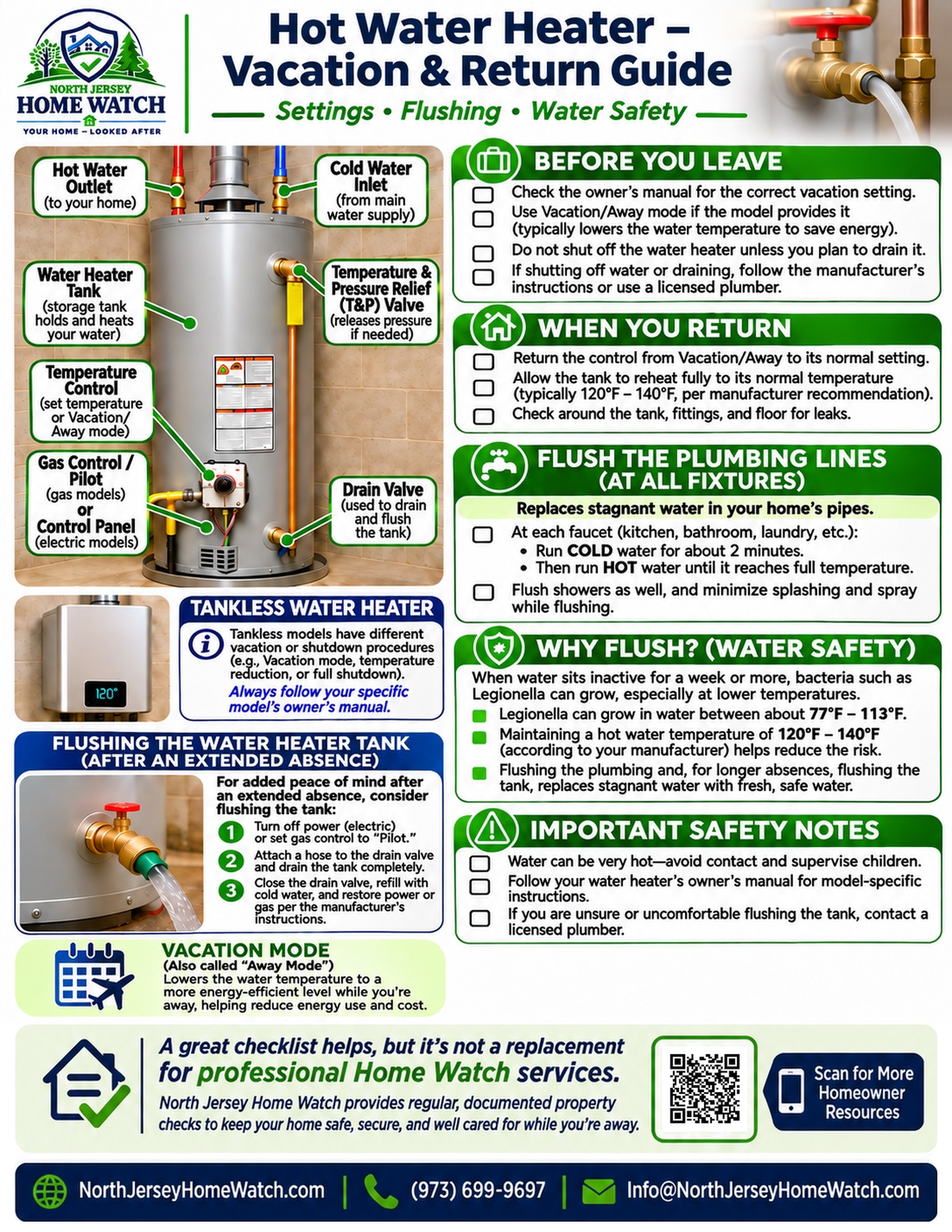
One of the most frequent questions we receive is: What should I do with my hot water heater and plumbing system before leaving my home for an extended period, and what steps should I take to safely prepare everything when I return? The answer largely depends on the duration of your absence and the type of unit you have. Most modern water heaters feature a Vacation Mode on the thermostat dial. This setting maintains the water at a lower temperature—typically around 50 to 70 degrees Fahrenheit—which is warm enough to prevent the tank from freezing but cool enough to save significantly on energy costs.
If you have an electric water heater and choose to shut off the main water supply, you must turn off the power to the heater at the circuit breaker. If the water level in the tank drops and the heating elements are exposed to air while energized, they will burn out almost instantly. For gas water heaters, using the vacation setting is usually the best approach as it keeps the pilot light lit without heating the water to full temperature. If you are leaving for several months, some homeowners prefer a full shutdown, but this requires a complete drain of the tank to prevent bacterial growth and sediment hardening.
Professional Oversight During Your Absence
Even with the best preparation, mechanical systems can still experience issues. This is where professional home watch services become an essential part of your property management strategy. While the water may be off, a home watch professional can check for signs of leaks from neighboring units (in condos), verify that the water heater has not leaked its contents, and ensure that the humidity levels in the home remain stable. In North New Jersey, we often see issues where a failed HVAC system leads to secondary plumbing problems; having eyes on the property ensures these are caught in days, not weeks.
Safe Restoration: What to Do When You Return
Returning home requires more than just flipping a switch. Your plumbing system has likely been sitting with stagnant water for weeks or months. Stagnant water can lead to the growth of bacteria, such as Legionella, and can allow lead or copper from the pipes to leach into the water supply. When you return, your first task should be to slowly turn the main water supply back on. Do not blast it open; a sudden surge of pressure can damage seals and valves.
Once the water is on, you must flush the entire system. Start by running the cold water at every tap for at least five to ten minutes. Move through the house room by room, including showers, tubs, and outdoor spigots. This clears out any sediment or metallic tastes that developed during the vacancy. Do not forget to flush the toilets several times and run the dishwasher and washing machine through a short cycle to clear their internal lines.
Restoring the Hot Water System Safely
After the cold lines are clear, it is time to address the hot water. If you turned off the power or gas, ensure the tank is completely full of water before turning it back on. To do this, open a hot water faucet and wait until the water flows in a steady stream without sputtering air. Once the tank is full, you can restore power or turn the gas valve back to the On position.
Regarding the hot water temperature, the CDC and OSHA recommend that water be stored at 140°F (60°C) to effectively kill bacteria. Many people lower their temperature to 120°F to save money or prevent scalding, but after an extended absence, it is wise to briefly set the heater to 140°F for a few hours to thermally disinfect the tank. Once the water has reached this high temperature and been flushed through the pipes, you can return it to your preferred setting. This process ensures that you are not showering in or consuming water that has been sitting in a lukewarm environment conducive to microbial growth.
Refrigerator and Filtration Maintenance
If your refrigerator has a water dispenser or ice maker, this system needs special attention. Most homeowners forget that the small plastic line feeding the fridge holds stagnant water. Upon your return, discard the first two or three batches of ice and run at least two gallons of water through the dispenser. If your home uses a whole-house water filtration system or an under-sink reverse osmosis unit, check the manufacturer’s guidelines. Often, filters need to be replaced if they have sat stagnant for more than thirty days, as the carbon media can become a breeding ground for bacteria without the constant flow of chlorinated municipal water.
Winter Considerations in North New Jersey
For those leaving during the North Jersey winter, the stakes are higher. If the power fails and your heating system stops, your pipes are at risk regardless of whether the main water is off. Any water remaining in the traps of sinks and toilets can freeze and crack the porcelain or the PVC piping. We recommend adding non-toxic RV antifreeze to all toilet bowls and sink drains. This prevents the water in the P-traps from freezing and also prevents sewer gases from entering your home if the water in the traps evaporates.
Summary Checklist
To ensure you have covered all bases, follow this condensed checklist before your next departure from North New Jersey:
- Locate and turn off the main water shut-off valve.
- Open the highest and lowest faucets to drain the lines.
- Set the water heater to Vacation Mode or turn off the breaker for electric units.
- Pour non-toxic antifreeze into drains and toilets if leaving during winter.
- Clear out the ice maker and turn it off to prevent the arm from cycling.
When you return, remember the sequence: water on slowly, flush cold lines, fill the water heater tank, then restore heat. By following these steps, you address the core of the question: What should I do with my hot water heater and plumbing system before leaving my home for an extended period, and what steps should I take to safely prepare everything when I return? You protect your investment, your health, and your peace of mind.
If you are planning a trip and want to ensure your North Jersey property is managed by experts who understand these complexities, schedule a consultation with our team. We provide the detailed inspections necessary to keep your home running smoothly, no matter how long you are away.
Have more questions? View our full FAQ page
Questions, answered.
Is it better to turn off the water heater or use vacation mode?
For most homeowners, Vacation Mode is the better option. It keeps the water warm enough to prevent freezing and bacterial growth while significantly reducing energy consumption. However, if you have an electric heater and must shut off your water supply, you should turn the unit off at the breaker to prevent the heating elements from burning out if the tank level drops.
How long should I flush my pipes after returning from vacation?
You should flush your cold water lines for 5 to 10 minutes at every faucet in the house. This clears out stagnant water and any accumulated lead, copper, or sediment. Additionally, run your hot water until it reaches its maximum temperature to ensure the water heater has cycled through its volume.
Can I leave my water on if I have a neighbor checking the house?
We strongly advise against leaving the main water supply on. Even with a neighbor checking in once or twice a week, a burst pipe can release thousands of gallons of water in just a few hours. Shutting off the main valve is the only foolproof way to prevent catastrophic flooding while you are away.