
What should I do if I discover a beehive or swarm around my home, and how can I keep my family and property safe?
Wondering what should I do if I discover a beehive or swarm around my home, and how can I keep my family and property safe? Our guide offers expert advice.
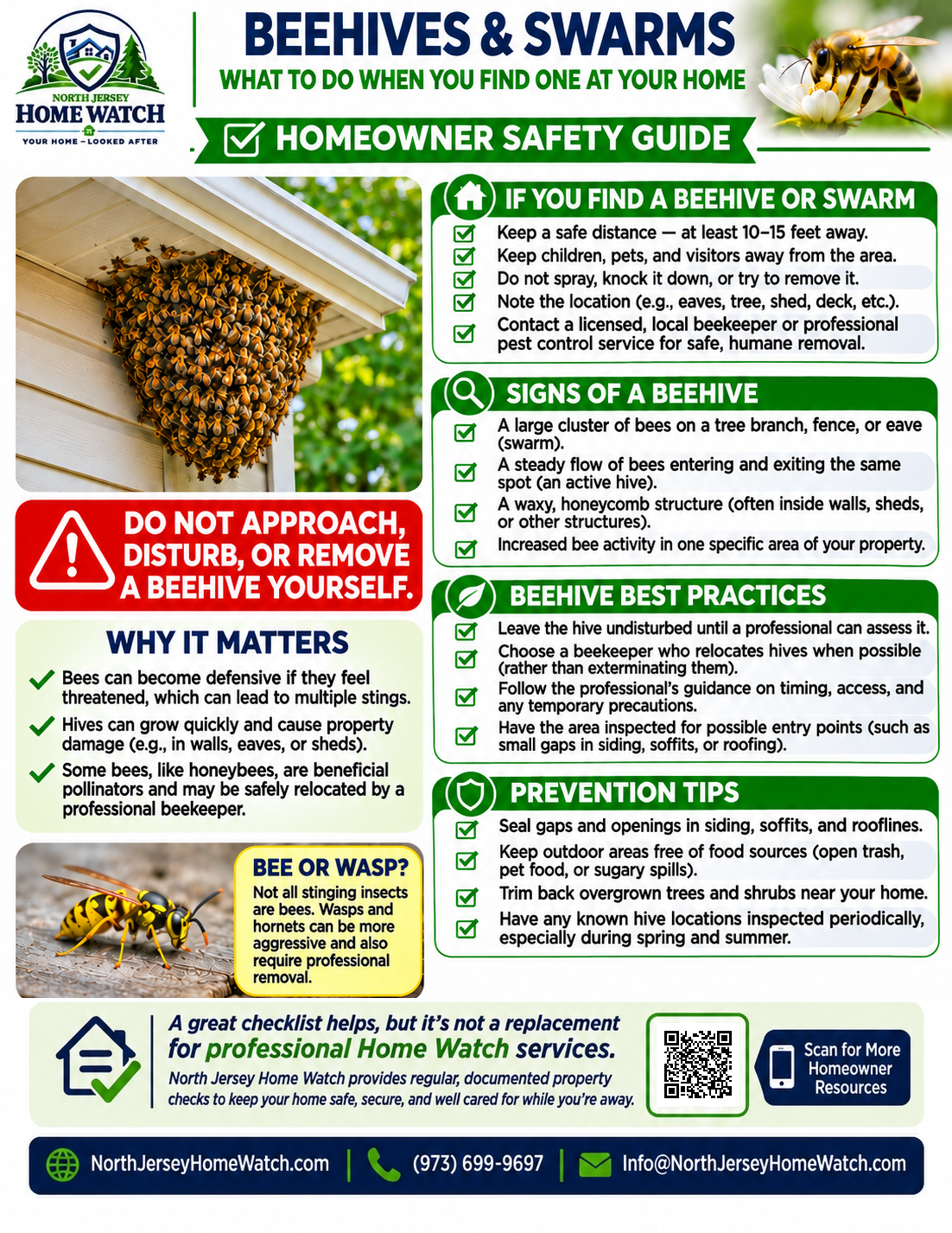
It starts as a faint hum. You might notice a few yellow jackets hovering near the eaves while you are unloading groceries, or perhaps several honeybees performing a frantic dance around a hollow tree in the backyard. For many homeowners in North New Jersey, discovering a nest is a sudden, unsettling realization. When you find yourself asking, "What should I do if I discover a beehive or swarm around my home, and how can I keep my family and property safe?" you are dealing with more than just a nuisance. You are dealing with a biological hazard that can threaten the physical structure of your house and the health of those inside it.
Stinging insects are opportunistic. They do not need much to set up shop—just a quiet corner, some protection from the wind, and a nearby food source. In our region, our homes provide the perfect ecosystem. From the dense woods of Bergen County to the lakeside retreats in Sussex, the architecture of a suburban or vacation home offers countless tight spaces that mimic a natural cavity. If you have been away from your property for a few weeks, these insects can establish a massive presence before you even turn the key in the lock.
Why Bees and Wasps Target Your Home
Stinging insects Choose nesting sites based on two primary factors: safety and proximity. To a queen wasp or a scout bee, your home is not a residence; it is a fortress. They seek out structural vulnerabilities that provide shelter from the elements and predators. In North New Jersey, the spring and early summer months are peak seasons for nest building. As the weather warms, queens emerge from hibernation looking for the ideal spot to start a colony.
Common nesting locations include rooflines, soffits, sheds, and the underside of decks. These areas are often overlooked during a quick walk-through. Gaps in your siding or small holes in your mortar are invitations for yellow jackets to move into the wall voids. Once they are inside the walls, the problem escalates from an outdoor annoyance to a structural threat. They can chew through drywall or follow electrical conduits, eventually finding their way into your living space. If you are asking what should I do if I discover a beehive or swarm around my home, and how can I keep my family and property safe, the first step is understanding that these pests are looking for the path of least resistance into your home's infrastructure.
The Vulnerability of Unoccupied Homes
Seasonal and unoccupied homes are especially vulnerable to infestations. Without the daily rhythm of human activity—doors opening and closing, lawnmowers running, or lights turning on—insects feel emboldened to build in high-traffic areas like entryways. A colony that might have been discouraged by a busy family can grow to thousands of members in a quiet vacation house. This is why consistent monitoring is vital. When we provide professional home watch services for our clients, we look specifically for these early warning signs. We check the perimeter, look under the eaves, and listen for the distinct vibration of a nest inside a wall before the homeowner arrives for their weekend getaway.
If you return to a home that has been closed up for a month, you might find a paper wasp nest the size of a basketball hanging from the porch ceiling. In these cases, the risk of a surprise encounter is high. Insects that have had weeks of undisturbed peace become extremely territorial. A simple act like opening a shutter or sweeping the porch can trigger a defensive swarm.
Identifying the Guests: Bees vs. Wasps vs. Hornets
Before you can decide on a course of action, you must identify what you are looking at. Not all stinging insects are created equal. Honeybees are generally docile unless the hive is threatened and are ecologically vital. They often form "swarms"—large, vibrating clumps of bees hanging from a branch—while they look for a new home. While a swarm looks terrifying, it is actually the bees at their most vulnerable. However, if they choose to move into your chimney or siding, they become a permanent problem. Honeybee hives contain wax and honey that, if left unattended after the bees are gone, will melt and cause significant property damage and attract secondary pests like rodents.
Wasps and hornets, on the other hand, are more aggressive. Yellow jackets are notorious for nesting in the ground or inside wall cavities. They are easily agitated and can sting multiple times. Baldfaced hornets build the iconic grey, pear-shaped paper nests in trees or under overhangs. These are perhaps the most dangerous to remove yourself because of their sheer numbers and defensive speed. If you find yourself wondering what should I do if I discover a beehive or swarm around my home, and how can I keep my family and property safe, remember that identification determines whether you need a beekeeper or an exterminator.
Immediate Steps for Safety
When you first spot a nest, your instinct might be to grab a can of spray or a garden hose. Stop. The most common cause of mass stinging events is homeowner intervention without proper equipment. If you see a swarm or a nest, keep a minimum distance of 20 feet. Do not throw objects at the nest or attempt to seal the entry hole if the nest is inside a wall. Sealing the exit only forces the insects to find another way out, which is usually into your bedroom or kitchen.
Keep children and pets inside. If the nest is near a primary entrance, use a different door until the situation is resolved. If you are dealing with a honeybee swarm that has just landed, it will likely move on within 24 to 48 hours. However, if they are still there on day three, they have likely decided to stay. This is the moment when the question of what should I do if I discover a beehive or swarm around my home, and how can I keep my family and property safe becomes most pressing. You must act, but you must act professionally.
Long-Term Property Protection
Prevention is the most effective way to keep your family safe. In the autumn and early spring, conduct a thorough inspection of your home’s exterior. Seal any cracks in the siding, repair torn window screens, and ensure that your attic vents have fine mesh covers. Pay close attention to the area where the roof meets the house, as this is a favorite entry point for hornets.
For North New Jersey homeowners who travel frequently, having a local set of eyes on the property is the best defense. A nest caught when it is the size of a golf ball is a minor fix; a nest caught when it is the size of a beach ball is a major expense. I integrate pest sightings into my regular checks because I know that a small discovery today prevents a disaster tomorrow. Understanding the habits of these insects allows me to spot the "scouts" before the colony moves in. If you are worried about what should I do if I discover a beehive or swarm around my home, and how can I keep my family and property safe, proactive maintenance is your best friend.
Why Professional Removal is Essential
There is a significant difference between a DIY project and professional pest management. Professionals have the protective gear and the specific knowledge required to ensure the entire colony is neutralized or relocated. For honeybees, I always recommend contacting a local North Jersey beekeeper who can safely move the hive. For aggressive wasps, an exterminator will use specialized dusts or foams that reach deep into the nest, ensuring that the queen is eliminated. Without removing the queen, the colony will simply rebuild.
Furthermore, professionals handle the cleanup. Removing a large nest from a soffit often requires structural repair or deep cleaning to remove pheromones that might attract future queens to the same spot. By hiring an expert, you ensure the safety of your family during the process and the integrity of your property afterward. This answers the second half of the common concern: what should I do if I discover a beehive or swarm around my home, and how can I keep my family and property safe? You delegate the risk to those trained to handle it.
Conclusion and Next Steps
Living in North New Jersey means sharing our environment with nature, but that does not mean nature should live in your walls. Whether you have a primary residence in Ridgewood or a summer home near Lake Hopatcong, the threat of stinging insects is a seasonal reality. By staying vigilant, recognizing the early signs of nesting, and knowing when to call for help, you can maintain a safe and comfortable environment for your family. Do not let a small buzzing sound turn into a major structural repair or a medical emergency.
If you are planning to be away from your home and want to ensure it remains pest-free and secure, I am here to help. I provide the oversight needed to catch these issues before they escalate. To learn more about how I can monitor your property while you are away, schedule a consultation.
Have more questions? View our full FAQ page
Questions, answered.
What is the difference between a bee swarm and a nest?
A swarm is a temporary cluster of bees (usually honeybees) looking for a new home, often found hanging from a tree branch. A nest is a permanent structure where the colony lives and raises young. Swarms are generally less aggressive but require professional assessment if they do not move on within 48 hours.
Should I spray a wasp nest inside my wall with a garden hose?
Absolutely not. Spraying a nest inside a wall can cause the insects to swarm into your home through light fixtures or vents. It also risks water damage to your insulation and drywall. If a nest is inside your home's structure, always contact a professional to avoid driving the insects further inward.
How can I prevent bees and wasps from returning to the same spot?
After a nest is removed, it is crucial to clean the area with soap and water to remove pheromones that attract other insects. Seal the entry point with caulk, expandable foam, or fine mesh. Regular exterior inspections during the spring are the most effective way to catch scout insects before they establish a new colony.