
What do I need to do before digging on my property to avoid hitting underground utility lines and causing dangerous or costly damage?
What do I need to do before digging on my property to avoid hitting underground utility lines and causing dangerous or costly damage? Call 811 first.
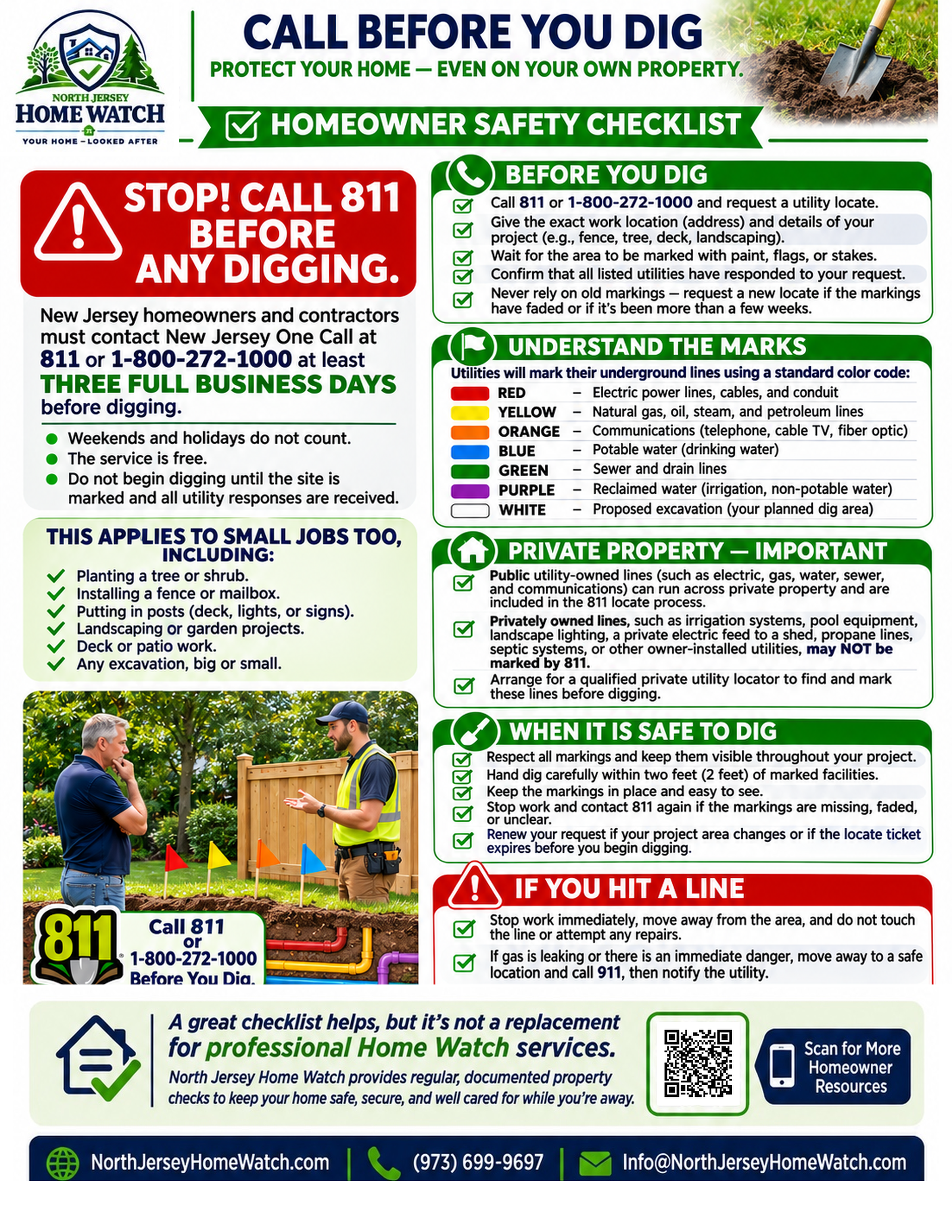
We have all been there. The weather finally turns in North Jersey, the ground thaws, and that vision for a new backyard patio or a row of privacy shrubs starts to feel urgent. It is tempting to grab a shovel and get to work while the motivation is high. However, as professionals who watch over homes for a living, we have seen how quickly a weekend DIY project can turn into a neighborhood-wide emergency. The most common question we hear from proactive homeowners is: What do I need to do before digging on my property to avoid hitting underground utility lines and causing dangerous or costly damage?
The answer is deceptively simple but non-negotiable: you must call 811. In our line of work, we prioritize risk mitigation. Whether we are checking on a client's furnace in January or overseeing a vendor in July, our goal is to prevent catastrophes before they happen. Digging without a utility mark-out is the opposite of that philosophy. It is a gamble where the stakes include your safety, your bank account, and the vital services your neighbors rely on.
The Hidden Grid Beneath Your North Jersey Lawn
You might think you know where your lines are. Perhaps you saw the cable guy bury a wire two years ago, or you remember where the gas line enters the house. The reality is that utility layouts are complex and rarely follow a straight, logical path. In North Jersey, many of our older neighborhoods have layers of infrastructure that have been repaired, replaced, or bypassed over decades. Natural gas pipes, high-voltage electric lines, fiber optic cables, water mains, and sewer pipes are often nestled just a few inches beneath your grass.
Soil erosion and settling can change the depth of these lines over time. What was safely deep twenty years ago might be closer to the surface today. This is why the question of what do I need to do before digging on my property to avoid hitting underground utility lines and causing dangerous or costly damage? always leads back to the professionals. You cannot rely on memory or guesswork when a single strike against a gas line can lead to an evacuation of your entire block.
Understanding the 811 Process
Calling 811 connects you with New Jersey One Call. This is a free service that coordinates with utility companies to mark the location of underground lines on your property. The process is straightforward, but it requires a bit of patience. You should call at least three business days before you plan to put a shovel in the ground. When you call, you will provide details about where you plan to dig. Within a few days, technicians will visit your home and use color-coded paint or flags to indicate where various utilities are buried.
- Red: Electric power lines, cables, conduit, and lighting cables.
- Yellow: Gas, oil, steam, petroleum, or gaseous materials.
- Orange: Communication, alarm or signal lines, cables, or conduit.
- Blue: Potable water.
- Green: Sewers and drain lines.
- Pink: Temporary survey markings.
- White: Proposed excavation limits.
I always recommend that our clients use white paint or stakes to mark the area where they intend to work before the utility trackers arrive. This ensures the technicians focus their efforts on the exact zone of your project.
Why Even Small Projects Require a Call
A common misconception I encounter is that 811 is only for major construction, like an addition or a swimming pool. This is a dangerous myth. Even planting a small tree, installing a fence post, or putting in a new mailbox requires a mark-out. Many utility lines, especially telecommunications and secondary electric lines, are buried very shallowly. Even a hand-held spade can sever a fiber optic cable, leaving you with a massive repair bill and no internet for a week.
When I provide professional home watch services, I look for signs of unauthorized digging or utility work near our clients' properties. I do this because I know that a neighbor’s project can impact your home just as easily as your own. If you hit a water main, you are not just flooding your garden; you are potentially causing a pressure drop or water damage to the surrounding infrastructure.
The Financial and Legal Consequences of Skipping the Call
If you are wondering what do I need to do before digging on my property to avoid hitting underground utility lines and causing dangerous or costly damage?, you are likely already aware that the costs are significant. If you dig without a mark-out and damage a utility, you are liable for the repair costs. These are not small fees. Repairing a severed fiber optic line can cost thousands of dollars. Repairing a gas line requires specialized crews, emergency response teams, and often, significant excavation.
Beyond the repairs, there are often fines associated with failing to follow state law. In New Jersey, the law is clear: you must notify the one-call center. Ignorance is not a legal defense. Furthermore, if you cause a service interruption for your neighbors, you could face private legal action. It simply is not worth the risk for the sake of saving three days of planning time.
What to Do if You Actually Strike a Line
Despite your best intentions, accidents can happen. If you are digging and you nick a line, or if you smell gas (a rotten egg odor), stop immediately. Do not attempt to fix it yourself. Do not cover the line back up with dirt to hide the mistake. Clear the area and call the utility company or 911 if there is a perceived threat of fire or explosion. Even a minor scratch on a pipe’s coating can lead to corrosion and a future leak, so every contact should be reported.
For those who are not on-site year-round, this is where having a local set of eyes becomes invaluable. I often act as the point of contact for homeowners who have contractors working on their property while they are away. I ensure that the contractors have their 811 ticket number and that the flags are respected throughout the duration of the project.
Safety as a Community Responsibility
Living in North Jersey means living in close proximity to our neighbors. Our utility grids are interconnected. When you take the time to ask what do I need to do before digging on my property to avoid hitting underground utility lines and causing dangerous or costly damage?, you are performing an act of community service. You are ensuring that the power stays on for the elderly couple next door and that the gas lines remain stable for everyone on the street.
At North Jersey Home Watch, I believe that homeownership is a marathon, not a sprint. Proper maintenance and safety protocols are the foundation of a stress-free home. Before you start your next landscaping project or install that new backyard fire pit, make the call to 811. It is free, it is the law, and it is the only way to truly know what is happening beneath your feet.
If you are planning major work or simply want someone to keep an eye on your property while you are away to ensure all safety protocols are followed, I am here to help. I provide the peace of mind that comes from knowing your North Jersey investment is being watched by a professional who understand the local landscape and the risks involved with property management. I can help oversee contractors and ensure that no one breaks ground without the proper permits and mark-outs in place. Schedule a consultation today to learn more about how I protect your home.
Have more questions? View our full FAQ page
Questions, answered.
How long does an 811 ticket remain valid in New Jersey?
In New Jersey, a standard 811 utility mark-out ticket is valid for 45 business days. If your digging project lasts longer than that, or if the painted markings become faded or obscured by weather or construction activity, you must call 811 again to have the lines refreshed before continuing your work.
Does 811 mark private lines like sprinkler systems or invisible dog fences?
No, 811 only marks public utility lines owned by provider companies. Private lines—such as underground sprinkler systems, electric lines running to a detached garage, invisible dog fences, or pool heaters—will not be marked. You may need to hire a private locating service to identify these lines before you begin digging.
What should I do if the utility company doesn't show up after I call 811?
By law, utilities have three business days to mark their lines. If the deadline passes and your property hasn't been marked, do not start digging. Call 811 again to file a 'no-show' ticket. It is vital to wait for confirmation that all utilities have either marked their lines or cleared the area as safe.