
Protecting Your North New Jersey Home: Finding and Using Water Shutoff Valves
Where are my home's water main and Branch Water shutoff valves, and when should I use them to protect my home while I'm away? Learn to prevent water damage.
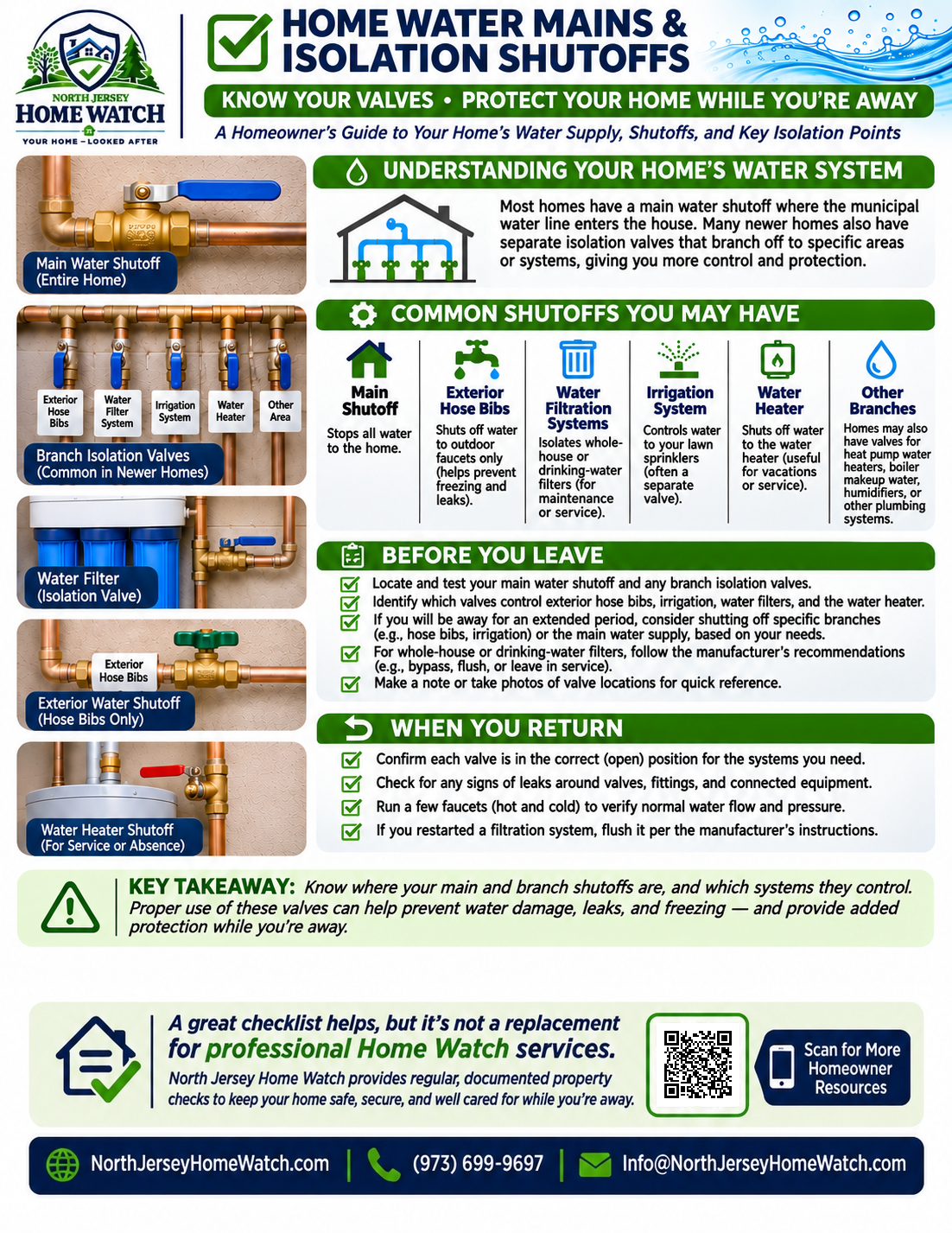
Water damage is the single most common cause of property loss for homeowners in North New Jersey. When a pipe bursts or a supply line fails while you are present, it is a stressful afternoon of mopping and calling a plumber. When it happens while you are on vacation, it is a catastrophic event that can lead to structural rot and mold. I often hear clients ask, "Where are my home's water main and Branch Water shutoff valves, and when should I use them to protect my home while I'm away?" Understanding the anatomy of your plumbing system is the first line of defense in protecting your investment.
In our region, we deal with dramatic temperature swings. A sudden freeze in January can turn a small drip into a major flood. By the time you return from your winter getaway, thousands of gallons could have saturated your drywall and flooring. This guide will walk you through the locations of your critical valves and the best practices for securing your home before you head out.
Locating the Main Water Shutoff Valve
The main shutoff valve is the gatekeeper of your home. It controls the flow of all water entering the building from the municipal supply or a private well. In North New Jersey, these are almost always located indoors to prevent freezing. You will typically find the main valve in the basement or a crawlspace, usually on the wall facing the street. Look for the water meter; the main shutoff is usually located immediately before or after it.
There are two common types of valves you might encounter. A gate valve looks like a small wheel. To close it, you turn it clockwise—remember "righty-tighty." These can become difficult to turn over time due to mineral buildup, so it is wise to test yours before an emergency occurs. The second type is a ball valve, which features a straight handle. When the handle is parallel to the pipe, the water is on. When it is perpendicular (forming a T-shape), the water is off. Knowing the answer to "Where are my home's water main and Branch Water shutoff valves, and when should I use them to protect my home while I'm away?" starts with identifying this primary point of control.
Understanding Branch Water Shutoff Valves
While the main valve kills all flow, branch valves allow you to isolate specific areas or appliances. This is crucial because you may not always want to shut off the entire house. For instance, if you have a high-tech security system that requires water for a backup cooling system, or if you have a neighbor coming over to water indoor plants, you might choose to leave the main on but isolate high-risk zones.
Branch valves are typically located near the appliance they serve. You will find them under kitchen and bathroom sinks, behind toilets, and behind the washing machine. There may also be larger branch valves in the basement that control specific zones, such as the second-floor bathrooms or the outdoor hose bibs. Labeling these valves with tags is a project we highly recommend for every homeowner. It removes the guesswork during a crisis.
When to Shut Off the Main Valve
If you are leaving your home for more than 48 hours, the safest course of action is usually to shut off the main water valve. This completely eliminates the possibility of a pressurized leak occurring while the house is empty. However, there is a catch. If your home is heated by a steam or hot water boiler system, that boiler may require a constant supply of water to operate safely. Shutting off the main could lead to the boiler dry-firing, which can crack the heat exchanger and leave your home without heat—leading to frozen pipes from the inside out.
In these cases, you must leave the main valve open but utilize your branch valves to secure the rest of the house. This is where professional home watch services become invaluable. We can help you identify which valves must stay open to keep your HVAC system running while ensuring the rest of the home is protected.
Where are my home's water main and Branch Water shutoff valves, and when should I use them to protect my home while I'm away?
To answer this question effectively, you need a pre-departure checklist. If you have a forced-air furnace (which doesn't need water), shut off the main valve. Once the main is off, go to the highest sink in the house and turn on the faucets to bleed the pressure out of the lines. Then, go to the lowest faucet (usually a utility sink in the basement) and do the same. This drains the vertical columns of water, so even if a pipe does freeze and crack, there is no volume of water left to cause damage.
If you must leave the main on for a boiler or irrigation, you should still shut off the branch valves for the following high-risk items:
- Washing Machines: The rubber hoses leading to your washer are under constant pressure and are a frequent point of failure.
- Dishwashers and Ice Makers: These small plastic lines can become brittle and crack without warning.
- Toilets: A running toilet can waste thousands of gallons, and a failed fill valve can cause an overflow.
Protecting Outdoor Systems and Irrigation
North New Jersey winters are notoriously hard on outdoor plumbing. Before the first frost, you must address your hose bibs (outdoor faucets). Even if you have "frost-free" faucets, they can still burst if a garden hose is left attached, as the hose prevents the water from draining out of the valve body. Disconnect all hoses, and if you have an interior shutoff for the outdoor line, close it and drain the exterior tap.
Irrigation systems require a professional blow-out with compressed air. Simply turning off the controller is not enough; water trapped in the plastic lines or the backflow preventer will expand when it freezes, shattering the components. Ensure your backflow preventer—usually a large brass assembly on the side of the house—is properly drained and insulated.
The Risk of Water Heaters and Softeners
When you shut off the water, you must also consider your water heater. If the tank is kept hot but no water is flowing through it, the internal pressure can fluctuate. Most modern heaters are fine, but for extended absences, many homeowners prefer to turn the heater to "Vacation Mode." This keeps the water warm enough to prevent bacterial growth but reduces energy consumption and stress on the tank. If you have a water softener, check if it has a bypass valve. You don't want the system trying to perform a regeneration cycle while the water supply is cut off, as this can damage the internal seals.
Why Location Knowledge Matters for Emergencies
Even if you don't plan on shutting the water off yourself, knowing the location of these valves is essential for directing others. If a neighbor or a home watch professional discovers a leak, they need to know exactly where to go. Every second spent searching for a hidden valve in a dark basement is another gallon of water ruining your finished basement or hardwood floors. We recommend taking photos of your valves and keeping them in a digital folder accessible from your phone.
Partnering with North Jersey Home Watch
Managing a property from a distance is a significant responsibility. While technology like smart water leak detectors can alert you to a problem, they cannot mop up the water or let a plumber into the house. I provide the physical presence necessary to ensure your home remains secure. I verify that valves are in the correct position, check for signs of hidden leaks under sinks, and ensure that your heating system is functioning correctly during the cold months.
Asking "Where are my home's water main and Branch Water shutoff valves, and when should I use them to protect my home while I'm away?" is the first step toward a worry-free vacation. The second step is ensuring you have a dedicated person looking out for your interests while you are gone.
I specialize in the unique needs of North New Jersey properties, from historic homes with complex plumbing to modern estates with sophisticated irrigation. Don't leave your home's safety to chance. If you are planning an extended trip or manage a seasonal property, I invite you to schedule a consultation with me today to discuss a custom oversight plan.
Have more questions? View our full FAQ page
Questions, answered.
Can I just turn off my water at the street curb?
Generally, no. The curb valve is owned by the municipality and usually requires a special long-handled 'curb key' to operate. Homeowners should use the interior main shutoff valve. Turning the curb valve without authorization can lead to fines, and if the valve breaks while you are using it, you may be liable for the expensive excavation and repair costs.
Will my pipes freeze if I shut off the main water valve?
Shutting off the water does not prevent freezing, but it prevents a flood if a freeze occurs. To fully protect the home, you should shut off the main if possible and then drain the pipes by opening the lowest faucets. This removes the water that would otherwise expand and crack the pipes. You must also maintain a minimum interior temperature of 55 degrees.
Should I shut off my water if I have a fire sprinkler system?
No. If your home is equipped with an interior fire sprinkler system, the water supply must remain on at all times. Sprinkler systems usually have a dedicated line or a specific valve configuration that must stay pressurized to provide fire protection. In these cases, you should only shut off individual branch valves to non-essential fixtures like sinks and toilets.