
Natural Gas Safety Guide for North Jersey Homeowners
What should I do if I smell natural gas in my home, how do I recognize a possible gas leak, and who should I call to protect my family? Learn life-saving tips.
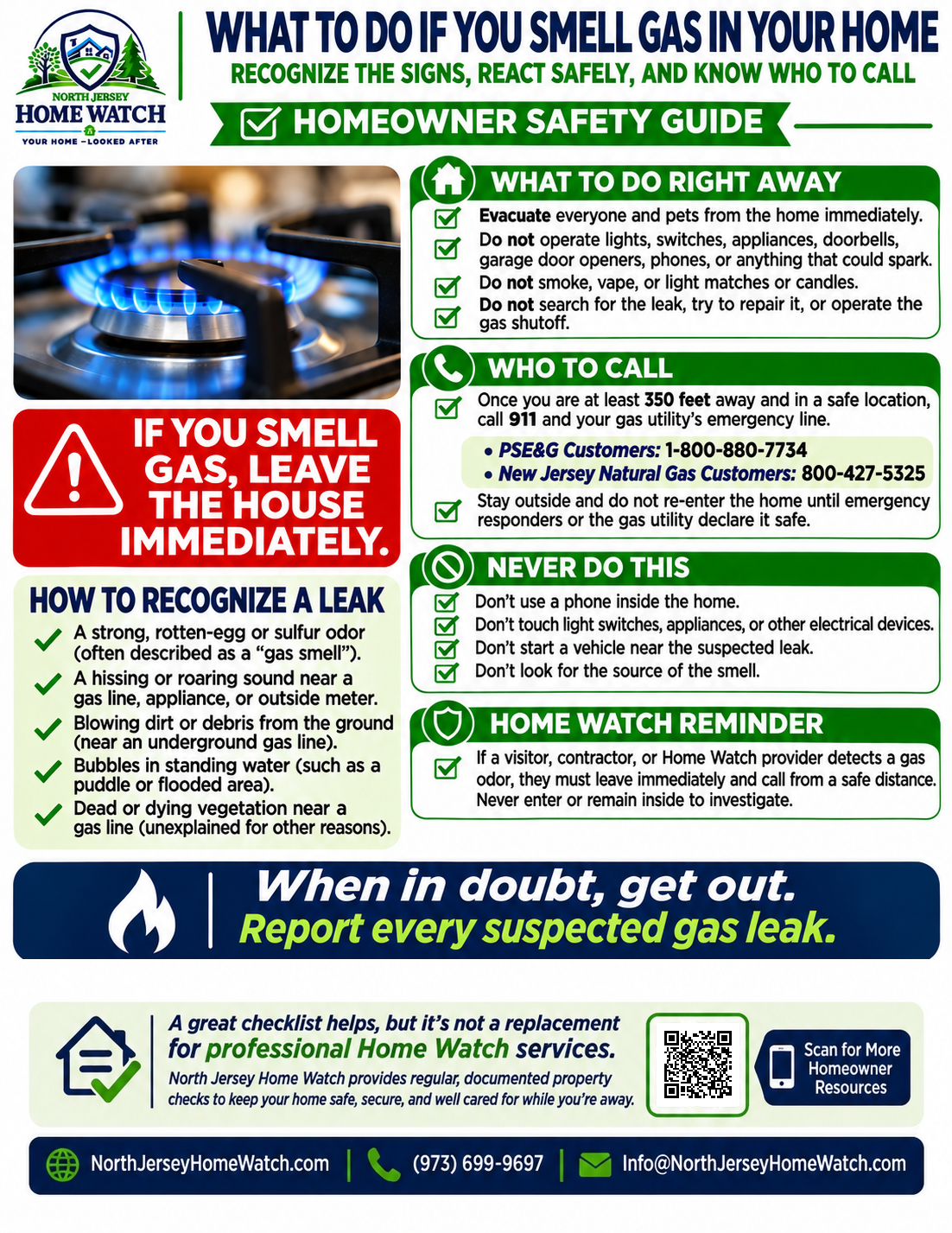
Natural gas is one of the most efficient ways to heat our North Jersey homes during the biting winters, but it requires a high level of respect and vigilance. When you are home, a leak is a crisis; when you are away for the season, it can be a catastrophe. Many clients ask us, "What should I do if I smell natural gas in my home, how do I recognize a possible gas leak, and who should I call to protect my family?" Understanding these three pillars of safety—recognition, reaction, and communication—is the best way to prevent a minor mechanical failure from becoming a headline.
Recognizing the Warning Signs
Natural gas is naturally colorless and odorless. To make it detectable to the human nose, utility companies add a chemical called mercaptan, which gives it that distinctive, sulfurous, rotten-egg smell. This is your first line of defense. However, you should not rely on smell alone. If a pipe is leaking underground or behind a wall, the soil or drywall can sometimes filter out the mercaptan, a phenomenon known as "odor fade."
Beyond the smell, listen for hissing, whistling, or roaring sounds near gas appliances like your furnace, water heater, or stove. These sounds indicate gas escaping under pressure. Visually, look for dead or dying vegetation in an otherwise green lawn, or bubbling in puddles and mud outside the home. Inside, you might notice a pilot light that refuses to stay lit or excessive condensation on windows near gas-burning equipment. If you see white clouds or dust blowing near a gas line, treat it as an immediate emergency.
Immediate Emergency Response
If you find yourself asking, "What should I do if I smell natural gas in my home, how do I recognize a possible gas leak, and who should I call to protect my family?", the very first step is to stop what you are doing and leave. Do not spend time opening windows to air out the house. Do not search for the source of the leak. Every second you spend inside is a second you are inhaling potentially toxic fumes and remaining in a high-risk explosion zone.
Critically, do not touch anything electrical. Flipping a light switch, using a garage door opener, or even unplugging a toaster can create a tiny spark. In a concentrated gas environment, that spark is enough to trigger an ignition. Do not use your cell phone or a landline while inside the house. Do not start your car if it is parked in an attached garage. Simply usher everyone out of the building and move to a distance of at least 300 feet away before taking further action.
Who to Call in an Emergency
Once you are safely away from the property, you must alert the authorities. You should call 911 immediately, followed by your local natural gas utility provider. In North Jersey, this is typically PSE&G or New Jersey Natural Gas. They have emergency teams available 24/7 to shut off the gas at the street level and secure the area.
Do not call a plumber or an HVAC technician first. While they are necessary for repairs, the initial priority is safety and containment, which only the fire department and the utility company are equipped to handle. When you speak to the dispatcher, provide your exact address and mention if you heard hissing or saw physical signs of a pipe rupture. This helps them prioritize the severity of the response.
The Role of Professional Monitoring
For homeowners who travel or maintain secondary residences in the area, the concern is often what happens when no one is there to smell the rotten eggs. This is where professional home watch services become an essential layer of protection. During my regular interior and exterior inspections, I check utility areas for signs of moisture, unusual sounds, and odors that a neighbor might miss.
I also recommend installing smart gas detectors. Unlike standard carbon monoxide detectors, these devices specifically monitor for methane levels and can send an alert to your smartphone if levels rise. If I receive an alert or detect an issue during a visit, I follow a strict emergency protocol: evacuating the premises, notifying the utility company, and coordinating with your local emergency contacts to ensure the home is made safe.
Prevention and Maintenance
Preventing a leak is always better than reacting to one. Ensure your furnace and water heater are serviced annually by a licensed professional. In North Jersey, the heavy snow and ice of winter can also pose a threat to your exterior gas meter. Always clear snow away from the meter by hand—never use a snowblower or shovel, which could strike and damage the regulator or piping. Ensure that the vent pipes for your appliances remain clear of debris and nests.
If you are planning any landscaping or renovation work that involves digging, even for something as simple as a fence post, you must call 811 to have your underground utility lines marked. Striking a gas line with a shovel is one of the most common causes of residential leaks. Taking these proactive steps ensures that you never have to wonder, "What should I do if I smell natural gas in my home, how do I recognize a possible gas leak, and who should I call to protect my family?"
How North Jersey Home Watch Helps
I serve as your eyes, ears, and nose when you aren't at home. My comprehensive checklists include checking the mechanical room for the faint scent of mercaptan and ensuring that all gas-fired appliances appear to be functioning normally. If a leak occurs while you are away, having a local representative who can meet the utility company and provide access to the property is invaluable. I take the guesswork out of home safety, providing you with detailed reports after every visit so you can rest easy knowing your North Jersey investment is secure.
If you are planning to be away from your property and want to ensure your systems are being monitored by professionals, I invite you to schedule a consultation with me today.
Have more questions? View our full FAQ page
Questions, answered.
What is the very first thing I should do if I smell gas?
The very first thing you should do is evacuate everyone from the home immediately. Do not turn lights on or off, use a phone, or start a car, as these can create sparks. Once you are a safe distance away, call 911 and your gas utility company to report the leak.
Can I use my cell phone to call for help while inside the house?
No, you should never use a cell phone or any electronic device inside a home where you suspect a gas leak. Cell phones can potentially generate a tiny spark that could ignite the gas. Wait until you are at least 300 feet away from the property before making the call.
Should I turn off the main gas valve myself?
You should not attempt to find or turn off the gas valve if you already smell gas inside the home. Your priority is evacuation. Only a trained professional from the fire department or the utility company should handle the shut-off during a suspected leak to avoid accidental ignition.