
How do I safely remove snow and ice from my property while protecting my home, walkways, and outdoor surfaces during the winter?
How do I safely remove snow and ice from my property while protecting my home, walkways, and outdoor surfaces during the winter? Follow our expert guide.
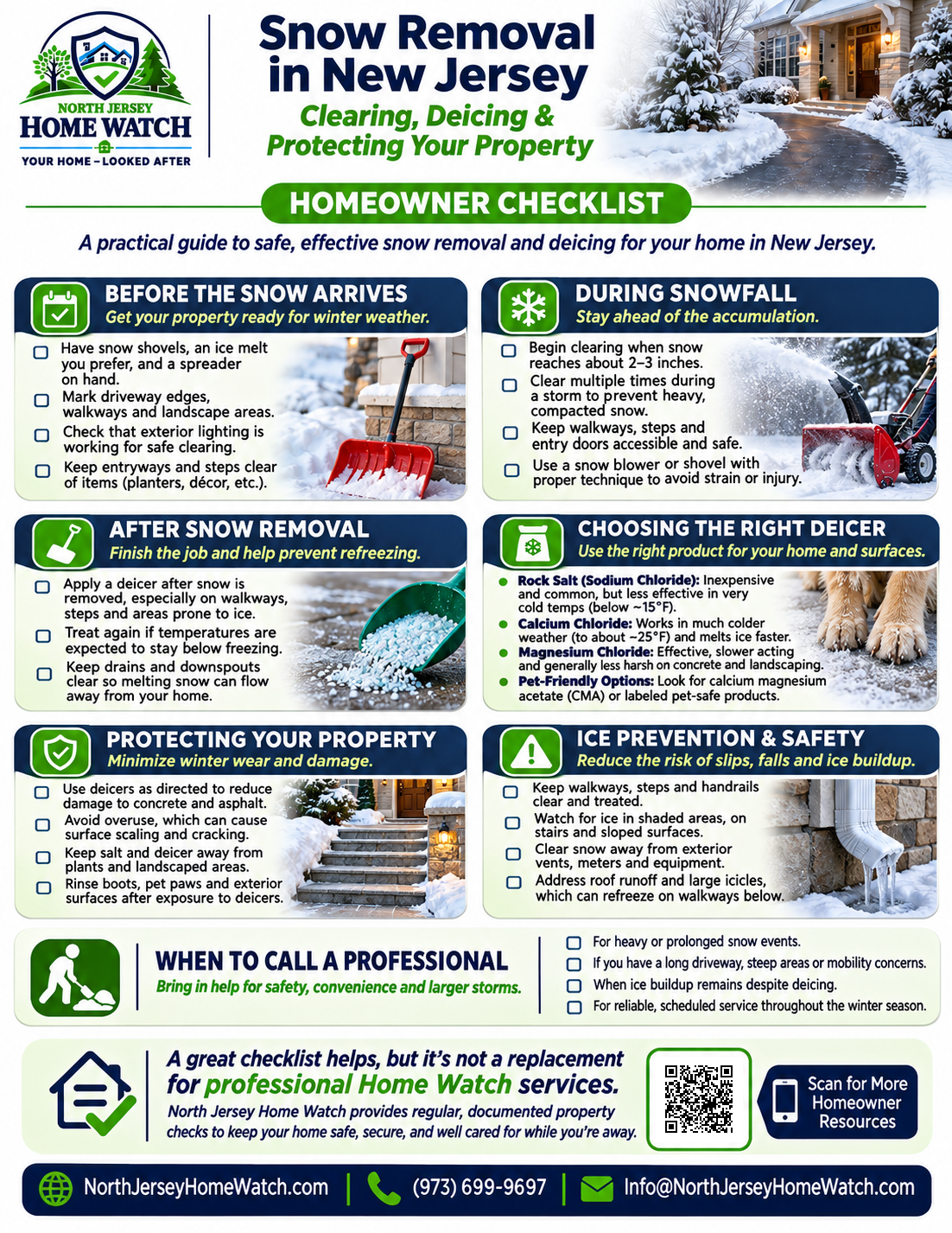
Winter in North Jersey is not merely a season of aesthetic beauty; it is a period of significant structural stress for residential properties. As the temperature drops and the humidity shifts toward ice and snow, the question many of our clients ask is: How do I safely remove snow and ice from my property while protecting my home, walkways, and outdoor surfaces during the winter? At North Jersey Home Watch, I manage properties for homeowners who demand excellence and longevity from their investments. I see firsthand what happens when winter maintenance is ignored or, perhaps more dangerously, performed incorrectly. A single season of improper deicing or aggressive plowing can lead to thousands of dollars in masonry repairs, landscaping replacement, and internal water damage.
Preparation is the foundation of a resilient home. Before the first flurry hits the ground, I advocate for a proactive sweep of the entire exterior. This begins with an audit of your equipment. Are your snow blowers serviced? Are your ergonomic shovels within reach? Most importantly, consider your exterior lighting. North Jersey winters bring early sunsets and gray, low-visibility mornings. I recommend upgrading to high-output LED fixtures at all entry points and along primary walkways. Not only does this deter trespassers when you are away, but it also reveals hidden black ice that could lead to a liability nightmare on your doorstep.
Clearing walkways is the next priority. Before the ground freezes, mark your driveway and path edges with flexible reflectors. This simple step prevents snowplows or even hand-shovels from scalping your lawn or destroying Belgian block curbing. If I am watching your home while you are in a warmer climate, I ensure these markers are visible and secure, providing a roadmap for service providers who might otherwise inadvertently damage your landscaping under two feet of snow. Additionally, ensure all outdoor furniture, hoses, and decorative planters are moved to a garage or basement. Porous materials like terracotta or certain stones will crack when trapped moisture expands during a deep freeze.
Once the storm arrives, the focus shifts to prevention. The most common mistake homeowners make is waiting until the snow stops to begin clearing. For the health of your surfaces, it is far better to clear two inches of snow three times than to wait for a six-inch accumulation. Heavy, wet snow compacts under its own weight, turning into a dense layer of ice that bonds to your pavers. This brings us to the core of the problem: How do I safely remove snow and ice from my property while protecting my home, walkways, and outdoor surfaces during the winter? The answer lies in your choice of tools and chemicals.
Metal-edged shovels are the enemy of high-end stone and wood decks. They gouge bluestone, scratch expensive mahogany decking, and can chip the protective sealant off concrete driveways. I always recommend plastic or poly-coated shovels with a rounded edge. When it comes to chemical intervention, the "cheapest bag at the hardware store" is often the most expensive choice in the long run. Rock salt (sodium chloride) is notoriously corrosive. It eats through concrete, kills the root systems of your perimeter boxwoods, and can be toxic to local pets. Instead, look for calcium magnesium acetate (CMA) or potassium chloride. These are effective at lower temperatures and are significantly gentler on your masonry and the environment. Applying a light layer of brine before the storm can also prevent the ice-to-surface bond, making subsequent mechanical removal much easier.
Property protection extends beyond the driveway. In North Jersey, we frequently deal with the freeze-thaw cycle, where daytime melting is followed by a flash freeze at night. This is how ice dams form on your roof and how water infiltrates small cracks in your masonry. To prevent this, ensure your gutters and downspouts are completely clear of debris. If water cannot move away from the foundation, it will pool, freeze, and eventually cause the soil to heave, potentially cracking your basement walls. We also suggest inspecting your exterior plumbing. Simply turning off the interior valve isn't enough; you must drain the line completely to prevent a burst pipe behind the siding. Our professional home watch services include checking these critical points, ensuring that a simple oversight doesn't result in a flooded basement while you are miles away.
Landscaping often takes the brunt of winter damage. Heavy snow loads can splay open upright evergreens like arborvitae. Use burlap or twine to loosely wrap these plants before the heavy storms hit. When shoveling, do not pile snow onto your delicate shrubs. The weight can snap branches, and the concentrated salt runoff from the pile will scorch the plants come springtime. Instead, distribute the snow evenly across open lawn areas where it can melt safely into the ground.
Knowing when to call for help is a sign of a responsible homeowner, not a failing. If you notice a thick ridge of ice forming at the edge of your roofline, do not attempt to climb a ladder in sub-zero temperatures to hack at it with a hammer. This is how shingles are destroyed and how serious injuries occur. Professional steam removal is the only safe way to mitigate ice dams. Similarly, if your primary furnace or boiler fails during a cold snap, your home can reach freezing temperatures in a matter of hours. This is why we emphasize the importance of regular checks. We look for the subtle signs of trouble—a pilot light that has gone out, a strange vibration in the HVAC unit, or a sudden drop in interior humidity—before they escalate into catastrophes.
Ultimately, the goal is to maintain the integrity of your property so that when spring arrives, you are not faced with a long list of repairs. Winter is a test of a home's envelope. By choosing the right deicers, using the correct tools, and maintaining a rigorous schedule of exterior checks, you can navigate the harshest months with confidence. It requires a shift from reactive to proactive thinking. Many of my clients have found that the peace of mind provided by a dedicated watch service is the most valuable tool in their winter arsenal. We act as your eyes and ears, ensuring that the question of how do I safely remove snow and ice from my property while protecting my home, walkways, and outdoor surfaces during the winter? is answered with a comprehensive, professional plan.
Every home in North Jersey is unique, but the physics of winter remain the same. Moisture, cold, and salt are a destructive trio if left unmanaged. Whether you are living in your home year-round or leaving it for the season, the maintenance of your exterior surfaces is a non-negotiable part of property ownership. Protect your investment by treating your stone, wood, and landscaping with the care they deserve. If you need assistance managing these seasonal transitions or want to ensure your home is monitored by experts during the cold months, I am here to help.
Don't let the next winter storm catch you off guard. I can provide a detailed assessment of your property's winter readiness and ensure that your walkways, plumbing, and landscaping are protected throughout the season. To learn more about how I can support your property management needs, schedule a consultation today.
Have more questions? View our full FAQ page
Questions, answered.
What is the safest deicer for bluestone and concrete walkways?
Calcium Magnesium Acetate (CMA) is widely considered the safest option for high-end masonry like bluestone and concrete. Unlike standard rock salt, CMA is less corrosive and operates effectively at lower temperatures. It is also safer for your landscaping and pets, preventing the chemical pitting and scaling often seen on North Jersey driveways after a harsh winter.
How do I prevent ice dams from forming on my North Jersey home?
Prevention starts with attic insulation and ventilation to keep the roof deck cool. Ensure gutters are cleaned before the first snow so meltwater can flow freely. If ice dams occur, avoid using salt pucks or hammers, which damage shingles. Professional steaming is the recommended method to safely clear ice without voiding your roof warranty.
Is it safe to use a metal shovel on a wooden deck?
No, metal shovels should never be used on wood or composite decking. The sharp edges can easily gouge the wood fibers or scratch the finish of composite materials, leading to rot and splinters. Always use a plastic shovel with a rubber or poly-protective strip to safely clear snow while maintaining the integrity of the deck surface.