How Do I Protect and Maintain My Lawn Irrigation System When I’m Away From Home?
Learn how do I protect and maintain my lawn irrigation system when I’m away from home to prevent flooding, high water bills, and North Jersey winter damage.
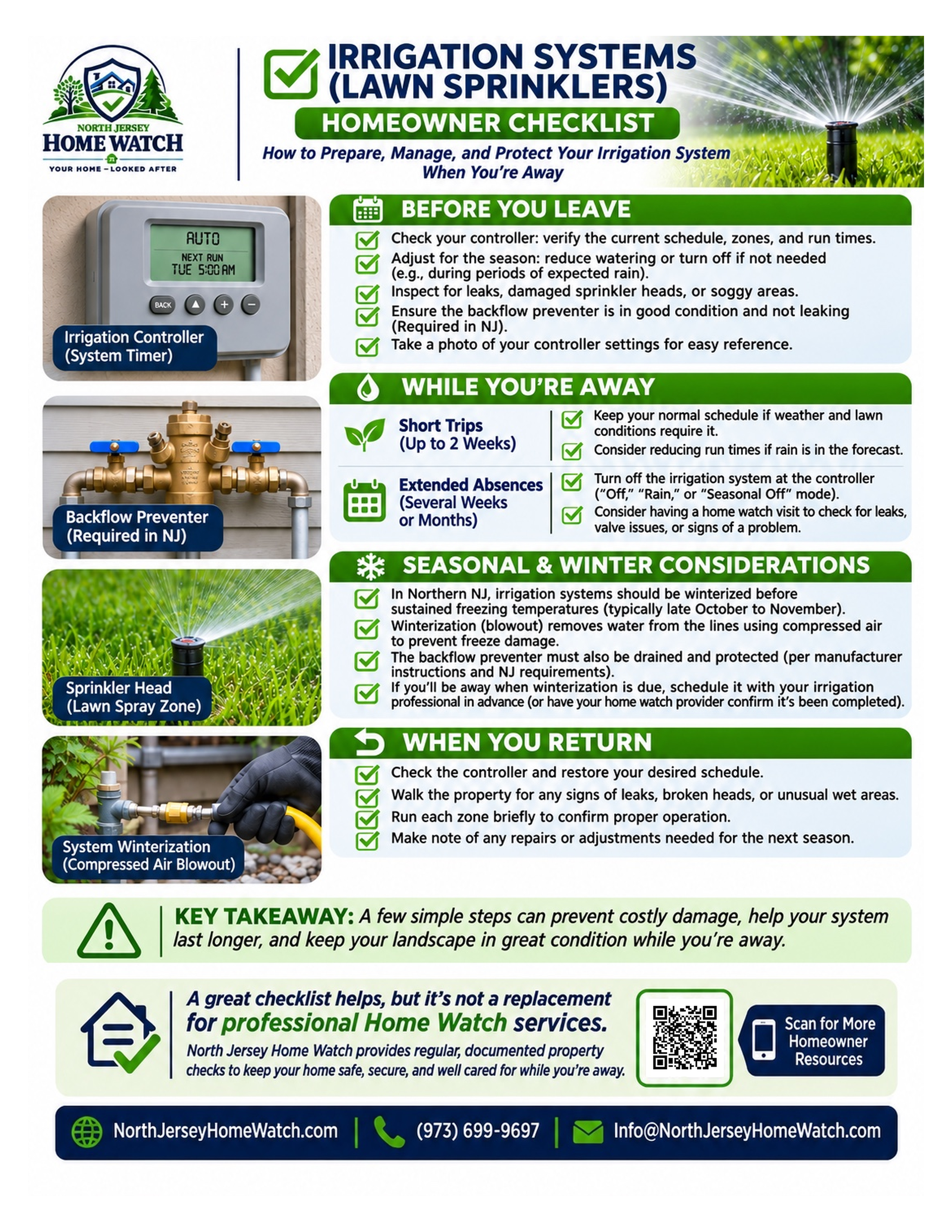
For many homeowners in North New Jersey, a lush, green lawn is a point of pride. We invest significant time and money into professional landscaping, and the irrigation system is the silent engine that keeps it all thriving. However, when you head south for the winter or escape for a long summer vacation, that same system can transition from an asset to a major liability. The primary question we hear from our clients is: How do I protect and maintain my lawn irrigation system when I’m away from home? Without active oversight, a simple mechanical failure can escalate into a catastrophic repair bill or a flooded basement.
Irrigation systems are complex networks of underground piping, pressurized valves, and electronic controllers. They are designed to operate out of sight and out of mind. But in North Jersey, where we deal with fluctuating water pressures and harsh seasonal transitions, these systems require regular attention. Neglect often leads to silent leaks that go unnoticed for months, resulting in astronomical utility bills. Even worse, a malfunctioning zone can oversaturate the soil near your foundation, leading to structural water intrusion. Protecting your investment means understanding the specific risks and taking proactive steps before you lock the door.
The Financial Impact of Irrigation Failures
Water waste is the most immediate consequence of a neglected system. A single cracked sprinkler head can waste thousands of gallons of water in a single cycle. If your controller is set to run three times a week and you are gone for a month, that one broken head could cost you hundreds of dollars in excess water fees. In towns like Ridgewood or Alpine, where water rates are structured to encourage conservation, these spikes are punishing. Beyond the bill, the physical damage to your landscaping can be even more expensive. Over-watering can drown expensive perennials and create fungal issues in your turf that require professional remediation.
When I perform my regular checks, I often find that homeowners haven't looked at their controllers in years. They assume the schedule they set in May is still appropriate for August or October. However, North Jersey weather is volatile. A heavy rainstorm followed by a programmed irrigation cycle leads to runoff, which washes away expensive mulch and topsoil. Understanding how do I protect and maintain my lawn irrigation system when I’m away from home starts with realizing that irrigation is not a 'set it and forget it' utility. It requires seasonal adjustments and physical inspections to ensure every drop of water is going where it belongs.
Identifying and Preventing Sprinkler Head Leaks
Sprinkler heads are the most vulnerable part of your system. They are stepped on by contractors, run over by lawnmowers, and clogged by dirt. A 'weeping' head is one that continues to leak even after the cycle has finished. This usually indicates a failing valve that isn't sealing properly. Over several weeks, this slow drip can turn your yard into a swamp. During our professional home watch services, we look for these specific red flags—spongy patches of grass, moss growth in unusual areas, or water pooling on sidewalks—that indicate a hidden leak.
Another common issue is the 'geyser' effect. This happens when the plastic nozzle of a sprinkler head breaks off entirely. When the system turns on at 4:00 AM, a high-pressure stream of water shoots into the air. If that head is located near a window well or a basement vent, you are essentially pumping water directly into your home. If you are not home to hear the water hitting the glass or see the puddle forming, the damage to your finished basement can be total. Replacing these heads and checking the seals on your valves is a low-cost preventative measure that saves thousands in potential insurance claims.
Managing the Irrigation Controller and Backflow Preventer
Your controller is the brain of the system, but it is susceptible to power surges and battery failure. If a summer thunderstorm in North Jersey knocks out your power, many older controllers revert to a default 'factory' setting. This might mean your lawn gets watered every single day for an hour per zone. When considering how do I protect and maintain my lawn irrigation system when I’m away from home, you must ensure your controller has a fresh backup battery and, ideally, a smart module that allows for remote monitoring. Smart controllers can sense local rainfall and automatically skip cycles, saving you money and protecting your lawn from over-saturation.
Then there is the backflow preventer. This device is legally required in New Jersey to prevent irrigation water—which may contain fertilizers or pesticides—from siphoning back into your home’s clean drinking water. These devices are usually located on the exterior of the house and are highly susceptible to freezing. A cracked backflow preventer is a high-volume leak that can flood a yard in hours. We recommend having your backflow preventer tested annually by a certified technician and ensuring it is properly insulated or drained if you are leaving before the first frost hits the ground.
Protecting Against the North Jersey Winter
For homeowners who leave their North Jersey properties for the winter, the stakes are even higher. The ground here freezes deep enough to expand the water inside your PVC or poly pipes. If those pipes haven't been properly cleared, they will burst. This isn't just a matter of turning off the water at the main valve inside the house. You must perform a professional 'blow-out.' This process uses a high-volume air compressor to force all residual water out of the lines and the sprinkler heads.
We often see DIY attempts at winterization fail because the compressor used wasn't powerful enough to clear the low spots in the piping. Any water left behind will settle, freeze, and create hairline fractures. When you turn the system back on in the spring, those fractures leak underground, causing your water pressure to drop and your bill to skyrocket. If you are asking yourself, how do I protect and maintain my lawn irrigation system when I’m away from home during the winter months, the answer is a combination of professional winterization and a home watch professional who checks the interior shut-off valves for any signs of seepage or 'sweating' that could lead to pipe failure.
The Role of Professional Oversight
A mechanical system will eventually fail; it is just a matter of when. When you are away, you lose the ability to spot these failures early. My role is to be your eyes and ears. I check the exterior perimeter for signs of irrigation run-off and inspect the basement for any signs that water is migrating toward the foundation. I also verify that the main irrigation shut-off valve is secure. If a leak is detected, I can coordinate with your irrigation contractor immediately, often before the next scheduled cycle occurs.
This level of care is especially critical for those with large estates in areas like Franklin Lakes or Mendham, where irrigation systems can have twenty or more zones. The more complex the system, the more points of failure exist. By integrating irrigation checks into a broader home maintenance strategy, you ensure that your return home is met with a beautiful landscape rather than a renovation project. We recommend keeping a map of your irrigation zones and a list of your contractor’s contact information in a place where your home watch provider can easily access it in an emergency.
Conclusion and Next Steps
Maintaining a property in North New Jersey requires constant vigilance, and the irrigation system is one of the most frequent sources of 'hidden' home damage. By addressing the health of your sprinkler heads, upgrading to a smart controller, and ensuring a rigorous winterization process, you significantly reduce your risk. However, technology can fail and seals can burst without warning. The best protection is having a physical presence on the property to verify that everything is functioning as intended.
If you are planning to be away from your property for an extended period, don't leave your lawn and foundation to chance. I provide the comprehensive oversight necessary to catch irrigation issues before they become disasters. To ensure your home is fully protected while you are away, schedule a consultation with me today to discuss a custom check-list for your property.
Have more questions? View our full FAQ page
Questions, answered.
Can I just turn off my irrigation controller while I am away?
While turning off the controller stops the watering cycle, it does not protect the system from leaks if the main water line is still pressurized. A failing valve or a cracked pipe can still leak regardless of the controller's status. For extended absences, it is safer to shut off the water at the main irrigation supply valve inside the house.
When is the best time to winterize my North Jersey irrigation system?
In North New Jersey, you should aim to have your system professionally blown out between mid-October and late November. Waiting until the first hard freeze puts your backflow preventer and shallow pipes at risk of cracking. If you leave your home earlier in the season, ensure the interior shut-off is closed and the exterior components are drained.
How do smart irrigation controllers help when I'm away from home?
Smart controllers connect to local weather stations via Wi-Fi to adjust watering schedules based on real-time data. If it rains in your North Jersey town, the system will automatically skip its next cycle. This prevents over-watering, saves money, and allows you or your home watch professional to monitor the system's status remotely via a smartphone app.