
How do I properly prepare my home’s water-treatment system before leaving for vacation or an extended absence, and what should I do when I return?
Learn how do I properly prepare my home’s water-treatment system before leaving for vacation or an extended absence, and what should I do when I return?
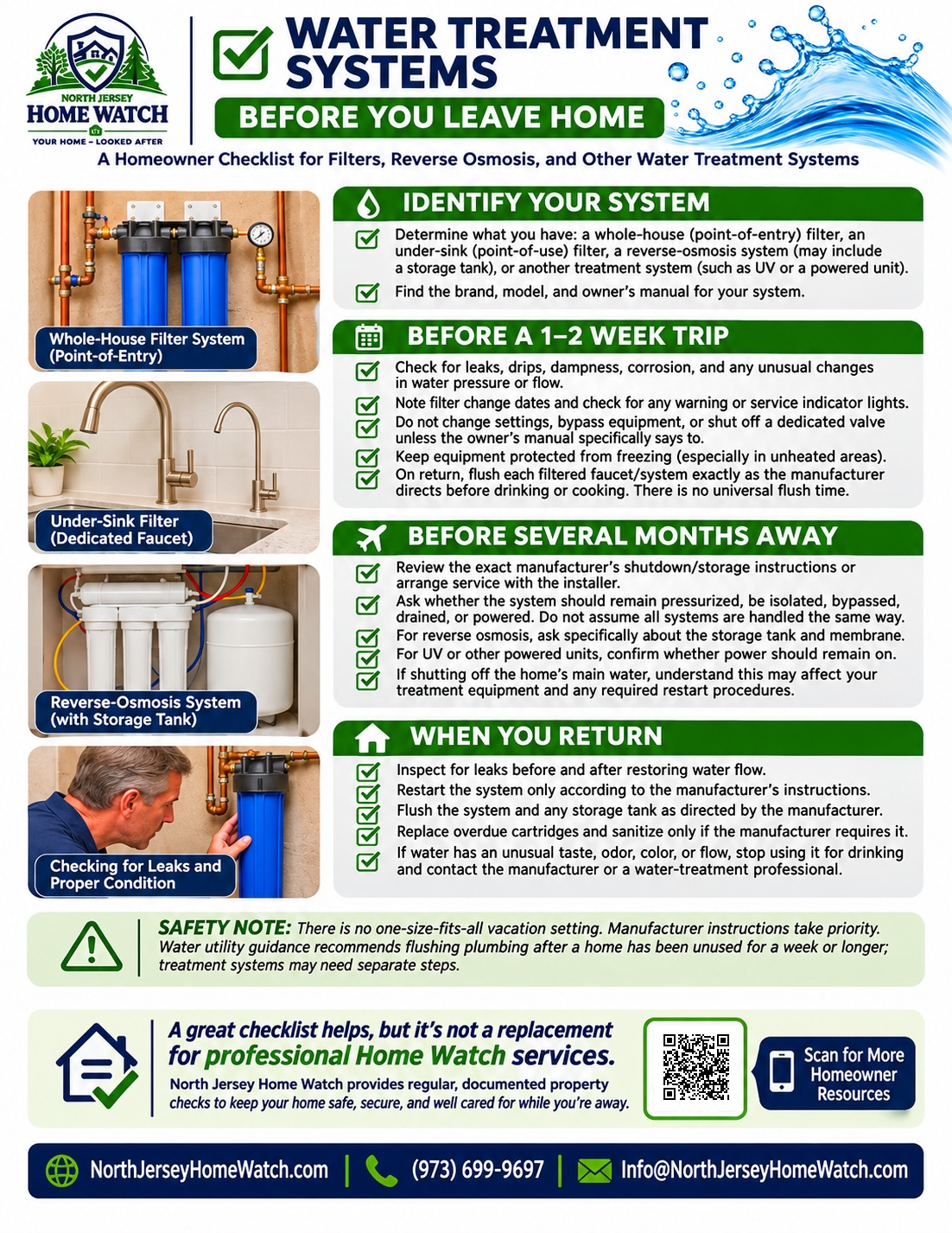
When you are packing your bags for a well-deserved getaway from North New Jersey, your checklist likely includes stopping the mail, setting the alarm, and finding a sitter for the dog. However, many homeowners forget one of the most complex mechanical systems in the modern house: the water filtration and treatment setup. Stagnant water is the enemy of a healthy home. Whether you have a simple carbon filter or a complex multi-stage purification array, you need to ask: How do I properly prepare my home’s water-treatment system before leaving for vacation or an extended absence, and what should I do when I return?
In North New Jersey, we deal with a variety of water issues ranging from hard water minerals to chlorine from municipal supplies. These systems are designed to work under the constant flow of daily use. When that flow stops, biological growth can occur, filters can dry out, and pressure issues can lead to catastrophic leaks. Leaving for a week is a minor concern; leaving for a season requires a strategic plan. We see the consequences of overlooked systems during our regular property inspections, and the cleanup is always more expensive than the prevention.
Know Your System Specifics
Before you touch a single valve, you must understand exactly what hardware is protecting your pipes. Not all water treatment is created equal. A whole-house sediment filter is a passive device, whereas a Reverse Osmosis (RO) system is a pressurized chemical process. If you have a UV purification system, it relies on a lamp that generates significant heat. Leaving a UV light on with no water flow can actually cook the water inside the chamber, leading to scale buildup on the quartz sleeve or, in extreme cases, damaging the housing.
Water softeners are perhaps the most common system in our region. These units rely on a brine tank and a control valve that triggers a regeneration cycle based on either time or gallon usage. If you leave the system powered on and the water main open, the unit might attempt to regenerate while you are gone. If a salt bridge has formed or a valve sticks, you could return to a flooded basement or a burnt-out motor. Knowing the manufacturer’s requirements for a 'vacation mode' is the first step in ensuring your home remains dry and your water remains potable.
Short Trips vs Extended Absences
There is a massive difference between a ten-day trip to the shore and a three-month winter residency in Florida. For short trips, you can usually leave your systems operational. However, I still recommend turning off the main water supply to the house if that is possible. If you do this, you must also turn off the power to your electric water heater and your water treatment systems. Why? Because if a system attempts to backwash or regenerate without a water supply, it can damage the internal components or create a vacuum that collapses filter housings.
For extended absences, the risks shift from mechanical failure to biological contamination. When water sits in a carbon filter for months, the chlorine that usually prevents bacterial growth is stripped away, creating a dark, wet environment perfect for biofilm. In these cases, we often recommend homeowners consider bypass protocols. If you are wondering, how do I properly prepare my home’s water-treatment system before leaving for vacation or an extended absence, and what should I do when I return, the answer often involves a complete system bypass followed by a professional sanitization upon your arrival back in North New Jersey.
Critical Pre-Departure Checklist
Before you lock the door, perform a physical audit of the equipment. Look for the 'white fuzz' of corrosion on copper fittings and check the floor for any signs of slow drips. Check your filter life indicator; if a filter is due to be changed in two weeks, change it now or wait until you return—never leave a spent filter sitting in stagnant water.
Check the brine tank level in your softener. If the salt is low, the system won't effectively treat the water, but if it is too high and sits in a humid basement for months, it can solidify into a 'salt bridge.' We suggest keeping the salt at a moderate level and ensuring the area around the unit is clear of any storage items that could be damaged by a leak. Many modern systems have a 'vacation' setting on the digital controller. This allows the system to remain pressurized without performing unnecessary backwashes that waste water and salt while you are away.
Managing these details can be overwhelming, which is why many residents rely on professional home watch services to monitor their utility rooms. Having a trained eye check for warning lights on a UV system or leaks around an RO tank can be the difference between a minor fix and a flooded foundation.
The Dangers of Improper Shutdown
I often see homeowners make the mistake of 'guessing' about their shutdowns. They might turn off the water but leave the RO system plugged in. As the RO unit attempts to maintain pressure in its storage tank, it may run the pump dry, leading to mechanical failure. Similarly, if you leave a whole-house filter pressurized but do not allow for thermal expansion, a sudden temperature spike in the house could increase the pressure enough to crack a plastic filter housing.
If you have a private well in North New Jersey, your treatment system is even more critical. Well pumps and pressure tanks work in tandem with your filters. If a leak develops downstream of the filter while you are away, your well pump could run continuously until it burns out. This is why we advocate for a 'Power Down, Water Down' approach for any absence longer than two weeks. This involves shutting off the pump breaker, closing the main valve, and then unplugging the filtration controllers.
Returning Home and System Revival
How do I properly prepare my home’s water-treatment system before leaving for vacation or an extended absence, and what should I do when I return? The return phase is where most people fail. You cannot simply flip a switch and drink a glass of water. After an extended absence, your pipes and your treatment tanks contain 'dead' water.
The first step upon return is a full system flush. Open every faucet in the house—starting with the ones furthest from the main—and let them run for at least ten minutes. This clears out any sediment and stagnant water that has sat in the lines. If you have a water softener, manually trigger a regeneration cycle immediately. This ensures the resin beads are cleaned and charged before you start using the water for bathing or cooking.
Addressing Specialized Filtration
For those with Reverse Osmosis systems under the sink, the storage tank is the primary concern. The water in that 2- or 3-gallon tank has been sitting without movement. You should drain the tank completely at the faucet, let it refill (which usually takes 2–4 hours), and then drain it again. This ensures the water you are drinking is fresh and hasn't picked up a 'stale' taste from the tank’s rubber bladder.
If your home uses a UV sterilizer, check the lamp's 'days remaining' indicator. If the power was cut during your absence, some older UV controllers might reset, giving you a false sense of security about the bulb's age. If the water was stagnant in the UV chamber, you should also consider a shock chlorination of the lines if the system was off for several months. This is particularly important for North Jersey homes on well water where coliform bacteria can be a seasonal concern.
Long-Term Maintenance and Home Watch
Ultimately, the best way to handle these systems is through consistent monitoring. A home is a living thing; it breathes, its pipes expand, and its mechanical systems require attention. When I perform my home watch visits, I don't just look for broken windows. I check the water softener for salt levels, I inspect the floor around the RO system for moisture, and I verify that the UV light is still burning bright.
Understanding the nuance of your specific plumbing helps prevent the most common question I hear: 'Why is my water brown after vacation?' Usually, it's because the iron and minerals settled in the bottom of the filter housing and were sent through the pipes the moment the first faucet was opened. A proper preparation and return protocol eliminates these surprises.
If you are planning an extended leave and want to ensure your North Jersey property is handled with professional care, don't leave your water system to chance. I can help you establish a custom shutdown and startup protocol that protects your equipment and your health. To ensure your home is ready for your next departure, schedule a consultation with me today.
Have more questions? View our full FAQ page
Questions, answered.
Is it safe to turn off my water softener while I am on vacation?
Yes, if you are turning off your main water supply, you should also turn off the power to your water softener. If the water is off but the power is on, the unit may attempt to regenerate, which can damage the internal valve or motor due to lack of water flow. For absences over two weeks, use the bypass valve.
What happens to the water in my Reverse Osmosis tank while I'm away?
The water stays in the pressurized storage tank but can become stagnant and develop a 'stale' taste. Upon your return to North New Jersey, you should drain the entire tank twice before drinking the water. If you are gone for more than three months, it is often best to replace the filters and sanitize the tank entirely.
Should I leave my UV water purifier on if I turn the water off?
No. UV lamps generate heat. If the water is not flowing, that heat can cause mineral scale to bake onto the quartz sleeve, reducing the system's effectiveness. In some cases, the heat can even damage the plastic fittings. Always power down the UV system if the main water valve is closed for an extended period.