
How do I properly prepare and protect my car, truck, or SUV when leaving it unattended for weeks or months?
How do I properly prepare and protect my car, truck, or SUV when leaving it unattended for weeks or months? Our North Jersey guide covers prep and storage tips.
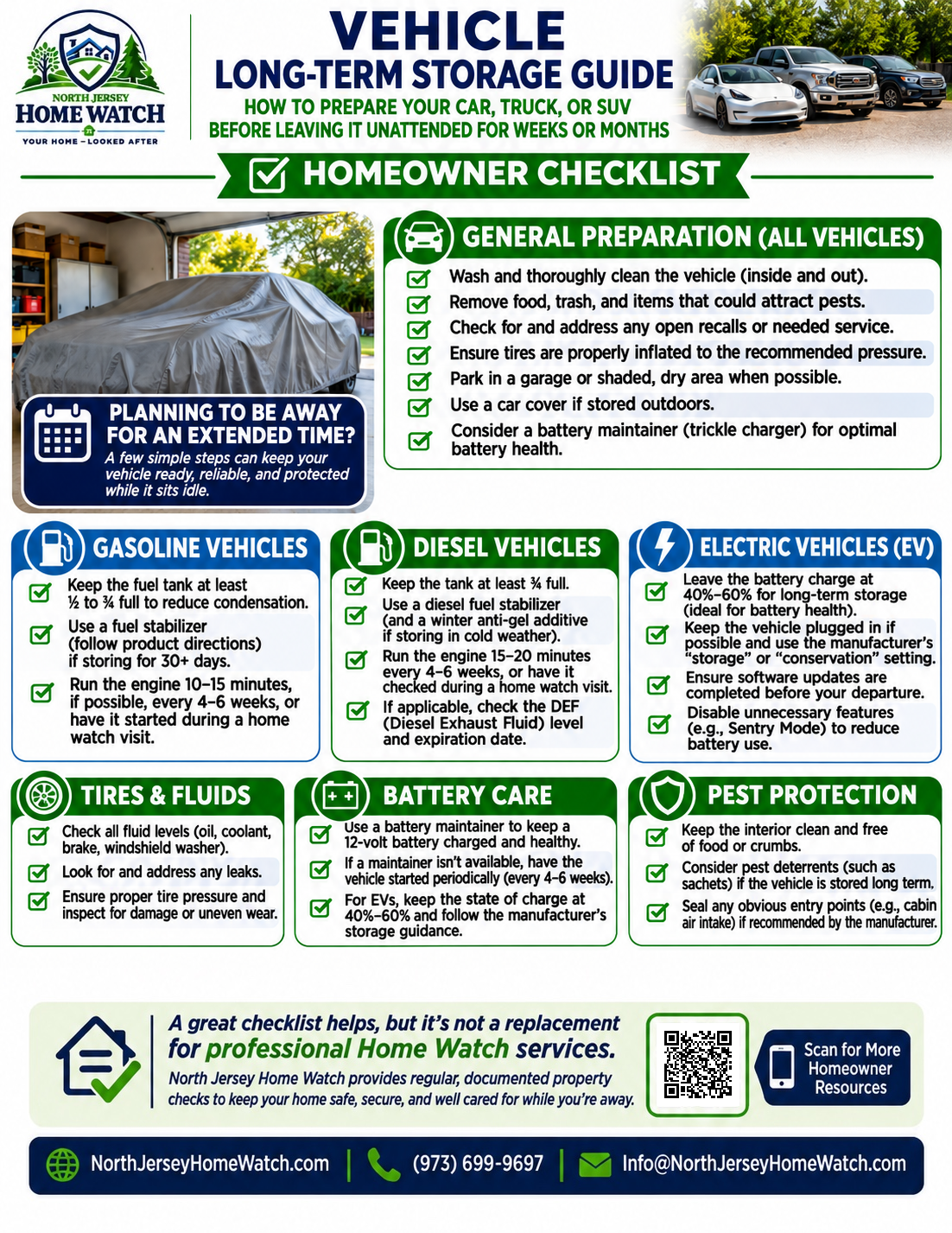
When we work with homeowners in North New Jersey who are heading south for the winter or traveling abroad for months, the conversation inevitably turns from the house to the driveway. People often ask us, "How do I properly prepare and protect my car, truck, or SUV when leaving it unattended for weeks or months?" It is a valid concern. A vehicle is a significant investment, and unlike a house, it is a complex machine designed to move. When a machine designed for motion sits idle, parts can seize, fluids can degrade, and local pests can move in. Over the years, we have seen the results of both perfect preparation and total neglect. We prefer the former.
Preparing a vehicle for a long slumber in the Garden State requires a different mindset than simply parking it after work. Our climate fluctuates. We deal with humidity in the transition months and bone-chilling freezes in January. If you are leaving your vehicle in an unheated garage or, worse, on a driveway, you need a plan. This isn't about being a mechanic; it’s about being a diligent owner. We’ve distilled our personal checklist into these practical steps to ensure that when you turn the key upon your return, the engine roars to life without hesitation.
The Cleanliness Factor
You might think washing a car you aren't going to drive is a waste of time. We disagree. In North New Jersey, our roads are often dusted with salt, brine, and industrial fallout even before the first snowflake hits. If you leave road salt or bird droppings on your paint for three months, you aren't just leaving dirt; you are leaving a corrosive agent that eats into the clear coat. We always recommend a thorough exterior wash and a high-quality wax before storage. The wax acts as a sacrificial barrier against dust and moisture.
Inside the cabin, the stakes are even higher. A single stray french fry under the passenger seat or an empty soda can in the cup holder is an invitation to every mouse in the neighborhood. When a car sits, it becomes a quiet, dry sanctuary for rodents. They don't just want your snacks; they want your wiring. We suggest vacuuming every crevice and wiping down surfaces to remove food scents. If you want to go the extra mile, place some scent-based deterrents like peppermint oil cotton balls or dryer sheets in the cabin and trunk. Avoid mothballs; the smell is nearly impossible to remove from upholstery later.
Fluid Management and Fuel Stability
One of the most common questions I get is: "How do I properly prepare and protect my car, truck, or SUV when leaving it unattended for weeks or months regarding the gas tank?" The answer is almost always to fill it up. A full tank leaves less room for air. Less air means less moisture can condense on the tank walls, which prevents water from contaminating your fuel system and causing rust. However, modern ethanol-blended gasoline starts to degrade in as little as thirty days. We always add a quality fuel stabilizer to the tank at the gas station, then drive the car for ten minutes to ensure the treated fuel circulates through the fuel lines and injectors.
While you are at it, check your oil. If you are close to your next service interval, change the oil before you leave. Used engine oil contains contaminants and acidic combustion byproducts that can cause etching on engine components if left to sit for months. Fresh oil provides a clean, pH-balanced environment for your engine’s internal parts. Don't forget your windshield washer fluid either; in North New Jersey, make sure you have a winter-grade mix that won't freeze and crack the reservoir during a February cold snap.
Protecting the Battery and Tires
A lead-acid battery is a chemical device that naturally loses its charge over time. Modern vehicles have "parasitic draws"—clocks, alarm systems, and onboard computers that slowly sip power even when the ignition is off. If you leave a car for two months, there is a high probability the battery will be dead when you return. We recommend using a smart battery tender or maintainer. Unlike a traditional charger, a tender monitors the voltage and only applies a charge when needed, preventing overcharging. If your garage has an outlet, this is the gold standard.
If you don't have access to power, you might consider disconnecting the negative battery terminal. Just be aware that this will reset your electronic settings and may require a radio code to unlock the infotainment system later. As for tires, they are susceptible to "flat-spotting." This happens when the weight of the vehicle presses down on one section of the tire for too long, causing a temporary or even permanent deformation. To mitigate this, inflate your tires to about 5-10 PSI above the recommended setting (but never exceeding the maximum PSI listed on the sidewall). This extra firmness helps the tire maintain its round shape. When you return, simply bleed the pressure back down to the manufacturer's specification.
Mechanical Safeguards and the Parking Brake
Here is a tip that surprises many: do not engage your parking brake if the car is staying on a level surface. If you leave a parking brake engaged for months, the brake pads or shoes can actually fuse to the rotors or drums through a process called galvanic corrosion, especially in our humid climate. Instead, use tire chocks (blocks of wood or plastic) to ensure the vehicle doesn't roll. This keeps your braking system free and clear.
We also advise lifting the windshield wipers off the glass or placing a small piece of plastic wrap between the blade and the windshield. Over time, the rubber can stick to the glass, and when you finally turn them on, the motor might tear the rubber strip right off the blade. It’s a small detail that saves a trip to the auto parts store on your first day back.
The Role of Professional Oversight
Even with the best preparation, things can happen. A garage door seal might fail, allowing a family of squirrels to take up residence in your engine bay, or a slow leak might develop in a coolant hose. This is where the human element becomes irreplaceable. While you are away, having someone physically lay eyes on the vehicle can prevent a minor issue from becoming a total loss. We often include vehicle visual checks as part of our broader professional home watch services, ensuring that there are no puddles under the chassis and no signs of pest intrusion.
I often see owners who think they’ve covered everything, only to find that a basement flood in their North Jersey home has increased the humidity in the garage so much that mold has started to grow on the leather seats. Regular check-ins catch these environmental shifts before they ruin the interior. When asking "How do I properly prepare and protect my car, truck, or SUV when leaving it unattended for weeks or months?", remember that preparation is only half the battle; monitoring is the other.
A Final Walkthrough Before You Leave
Before you lock the garage door and head to the airport, do one final sweep. Check that all windows are rolled up tight. Ensure the trunk is fully latched. Check that no interior lights were accidentally left on. I like to leave a note on the steering wheel for ourselves or our home watch provider. This note should list exactly what was done: "Fuel stabilized, battery tender connected, tires overinflated to 40 PSI, parking brake OFF." This ensures that anyone moving the vehicle—or you, upon your return—doesn't forget the temporary state of the machine.
In North New Jersey, we are lucky to experience all four seasons, but those seasons are exactly what make vehicle storage a challenge. By taking these proactive steps, you aren't just storing a car; you are preserving your mobility. There is a specific peace of mind that comes from knowing your home is secure and your vehicle is ready to go the moment you arrive back on North Jersey soil.
If you are planning an extended trip and want to ensure both your property and your vehicles are in good hands, we can help. Our team provides the local, experienced eyes you need to travel without worry. To learn more about how we can monitor your estate while you are away, schedule a consultation with us today.
Have more questions? View our full FAQ page
Questions, answered.
Is it better to start the car periodically or leave it off?
If you cannot drive the car for at least 20 minutes to reach full operating temperature, it is better to leave it off. Short idlings create moisture in the oil and exhaust that never evaporates, leading to corrosion. A battery tender is a far better solution for maintaining the battery than occasional idling.
Should I use a car cover in my garage?
A breathable car cover is excellent for preventing dust buildup and protecting the paint from accidental scratches. However, never use a waterproof plastic tarp, as it traps moisture against the metal, which can accelerate rust and encourage mold growth in the humid North Jersey climate.
How do I protect my engine wiring from rodents?
Rodents are attracted to soy-based wire insulation found in many modern vehicles. Beyond cleaning out food, you can wrap exposed wires with rodent-deterrent tape (infused with capsaicin) or place high-frequency ultrasonic repellers in the garage to discourage nesting in the engine bay while the vehicle is unattended.