
How do I properly care for my garbage disposal, prevent problems while I'm away, and recognize when it needs attention?
Learn how do I properly care for my garbage disposal, prevent problems while I'm away, and recognize when it needs attention before leaving your home.
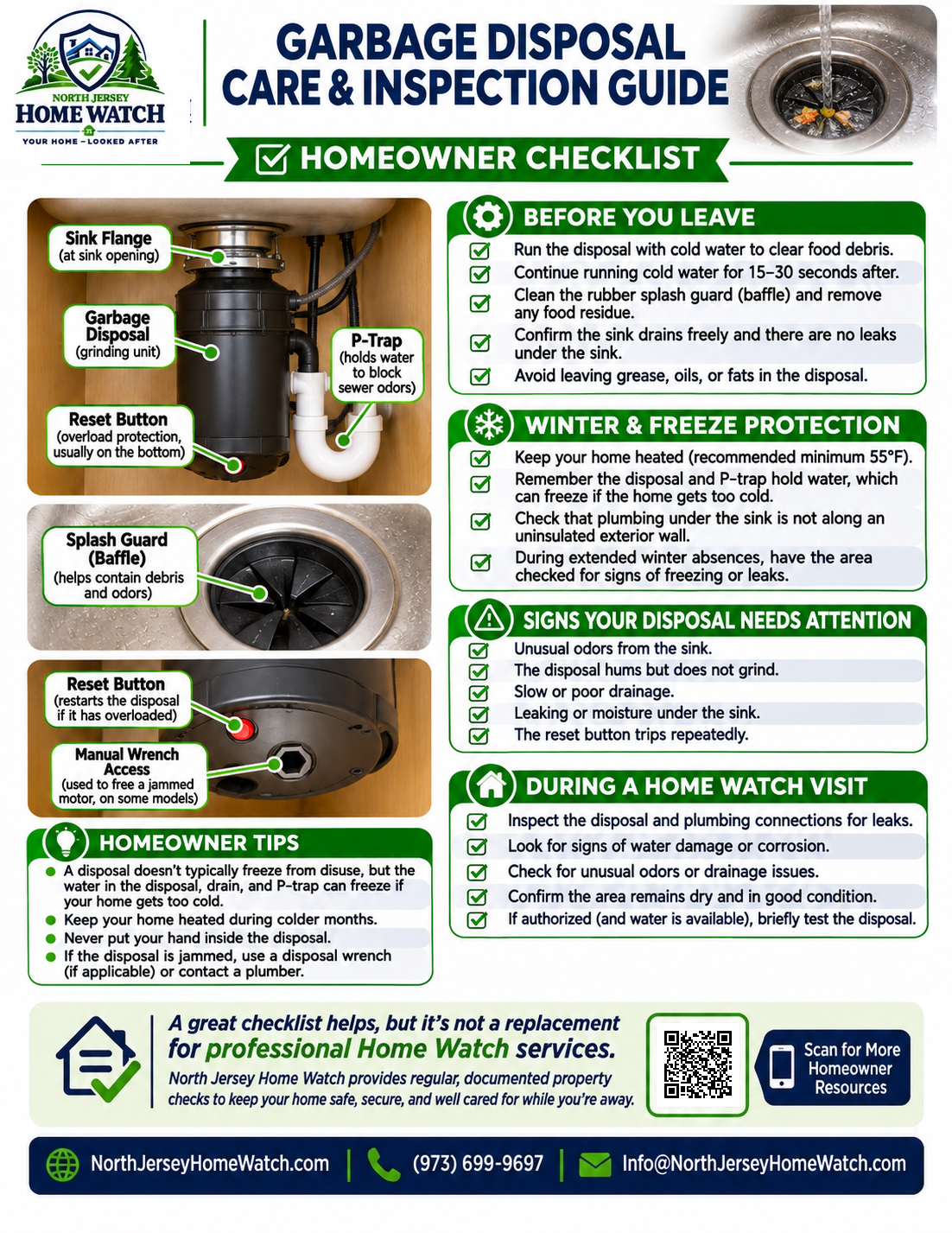
When you prepare to leave your North Jersey residence for the season, your checklist likely includes locking the doors, setting the thermostat, and stopping the mail. However, one of the most frequently overlooked components of a vacant home is the kitchen sink. You might wonder, "How do I properly care for my garbage disposal, prevent problems while I'm away, and recognize when it needs attention?" Ignoring this small appliance can lead to foul odors, seized motors, or even catastrophic leaks while you are hundreds of miles away. At North Jersey Home Watch, I have seen firsthand how a little bit of organic matter left in a dark, damp disposal can turn a homecoming into a plumbing nightmare.
Maintaining a disposal is not just about avoiding a clog today; it is about ensuring the mechanical integrity of your kitchen infrastructure during periods of inactivity. In our region, where temperature fluctuations can affect indoor humidity and pipe health, a proactive approach is essential. This guide covers the preventative steps, seasonal considerations, and warning signs every homeowner should know before they head out for a well-deserved vacation.
The Anatomy of Disposal Prevention
The most effective way to care for your disposal is to ensure it is completely clean before you lock the front door. Most people believe that if the water is running clear, the disposal is empty. This is a common misconception. Fibrous foods, grease, and small particles often cling to the grinding chamber or the undersides of the impellers. Over time, these remnants decay, creating a breeding ground for bacteria and fruit flies. This is why many North Jersey homeowners return to a kitchen that smells like a landfill.
To prevent this, perform a deep flush. Start by running cold water and turning on the disposal to clear any immediate debris. Next, feed a tray of ice cubes into the unit along with a handful of kosher salt. The ice acts as a physical abrasive to scrub the blades, while the salt provides extra scouring power. Follow this with a specialized disposal cleaner or a simple mixture of baking soda and vinegar. This effervescent reaction helps lift slime from the walls of the unit. Finally, run the water for an additional sixty seconds after you turn the motor off. This ensures that any loosened particles are pushed all the way through the P-trap and into the main sewage line.
Why Inactivity is a Risk Factor
Mechanical devices are designed to move. When a garbage disposal sits idle for weeks or months, several things happen. First, the water in the P-trap—the U-shaped pipe under your sink—can evaporate. This trap is your only defense against sewer gases entering your home. Second, the internal seals of the disposal can dry out and crack if they aren't kept moist. Third, residual minerals from our North Jersey water can crystallize on the impellers, causing them to "freeze" or seize up when you finally flip the switch upon your return.
If you are leaving for an extended period, it is wise to have someone run the disposal periodically. Our professional home watch services include a comprehensive kitchen check where we run water through the sinks and briefly cycle the disposal. This simple act keeps the seals lubricated, prevents the motor from seizing, and ensures the P-trap remains full of water to block odors. We also check the cabinet underneath for any signs of slow drips that might have started after the last time the unit was used.
Seasonal Protection and Winter Concerns
Winter in North Jersey presents unique challenges for plumbing. While most vacationers leave their heat on a low setting, a power outage or an exceptionally cold snap can drop the internal temperature of your home rapidly. If a disposal is full of wet, organic sludge, that mass can freeze and expand, potentially cracking the plastic housing of the unit. Furthermore, if your kitchen sink is located against an exterior wall, the pipes are even more vulnerable.
Before leaving for the winter, ensure that your cabinet doors under the sink are left slightly ajar. This allows the home’s ambient heat to circulate around the pipes and the disposal unit. Additionally, never leave a disposal "dirty" in the winter. The combination of cold pipes and congealed grease is a recipe for a solid blockage that can burst a pipe if the pressure becomes too great. By thoroughly cleaning the unit, you remove the material that most easily traps water and causes these freezing issues.
How Do I Properly Care for My Garbage Disposal and Recognize Warning Signs
Recognizing when your disposal needs professional attention before you leave can save you thousands in water damage. If you find yourself asking, "How do I properly care for my garbage disposal, prevent problems while I'm away, and recognize when it needs attention?", start with your ears. A disposal that hums but doesn't spin is likely jammed. A disposal that makes a high-pitched metal-on-metal screeching sound likely has worn-out bearings. These are signs that the unit is nearing the end of its life and should be replaced before you leave it unattended.
Visual cues are equally important. Check the bottom of the disposal unit with a flashlight. If you see crusty white or rust-colored streaks on the exterior of the canister, the internal seals are failing. This is a "silent" leak; it might only drip when the unit is running, but over time, it will rot your cabinetry and foster mold growth. If you see any moisture at the reset button or the power cord entry point, stop using the unit immediately. This represents a significant electrical hazard.
Drainage and Connection Integrity
Because the garbage disposal is integrated into your dishwasher drainage system, a problem with one often affects the other. If you notice that your sink drains slowly even when the disposal is empty, you likely have a partial clog further down the line. Leaving a partial clog in place while you are away is dangerous. As the water in the pipes remains stagnant, the clog can solidify, making it much harder to clear when you return.
Always check the mounting ring—the part where the disposal connects to the sink flange. Over years of vibration, these can vibrate loose. Give the unit a gentle tug. If it wiggles or feels insecure, the plumber’s putty or the rubber gasket may have failed. Addressing this minor adjustment prevents a major flood. When we perform our North Jersey property inspections, we specifically look for these points of failure because we know that a small drip under a sink can go unnoticed for months, destroying floorboards and creating costly remediation projects.
Peace of Mind Through Professional Oversight
The reality of homeownership is that you cannot anticipate every mechanical failure. However, you can mitigate the risks. By following a strict pre-departure routine—cleaning the unit, checking for leaks, and ensuring the electrical connections are dry—you set yourself up for success. But the missing piece for many is the "active" check. A house that is monitored is a house that is protected. Knowing that a local expert is physically turning the blades and checking the seals provides a level of security that a camera or a smart sensor simply cannot match.
I take the guesswork out of kitchen maintenance by documenting the state of your appliances during every visit. If a disposal begins to leak or a drain begins to back up, we catch it in days, not months. This prevents the nightmare scenario of returning to North Jersey only to find your kitchen floor ruined by a slow, steady leak from a faulty disposal unit.
If you are planning to be away from your home for a week, a month, or the entire season, do not leave your plumbing to chance. Taking the time to understand how do I properly care for my garbage disposal, prevent problems while I'm away, and recognize when it needs attention? is the first step toward responsible home ownership. Ensure your kitchen remains a clean, functional space by giving your disposal the attention it deserves before you head out.
To ensure your home is fully prepared for your next trip, schedule a consultation with me today. We can walk through your property and identify the specific vulnerabilities in your plumbing and appliance setups, giving you total confidence while you are traveling.
Have more questions? View our full FAQ page
Questions, answered.
Can I leave a small amount of food in the disposal if I am only gone for a weekend?
We strongly advise against it. Even 48 hours is enough time for organic matter to begin decomposing, which attracts pests and creates odors. Always flush the disposal with cold water and a bit of dish soap for at least 30 seconds before any departure to ensure the grinding chamber is completely clear of debris.
How do I recognize when my disposal needs attention before a long trip?
Listen for unusual noises like grinding or humming, and use a flashlight to check the bottom of the unit for rust or water spots. If you notice slow drainage or a persistent 'earthy' smell despite cleaning, these are signs the unit or the connected pipes require professional maintenance before you leave the home unattended.
Should I unplug my garbage disposal while I am away for the winter?
While unplugging it prevents electrical surges, it isn't strictly necessary if you have a surge protector. However, the more important step is ensuring it is dry and the P-trap is full. If you are concerned about 'frozen' impellers, having a home watch professional cycle the unit once a month is the best way to maintain the motor's health.