How do I know if wild animals are getting into my home, what damage can they cause, and what can I do to prevent them?
Wondering how do I know if wild animals are getting into my home, what damage can they cause, and what can I do to prevent them? Protect your property today.
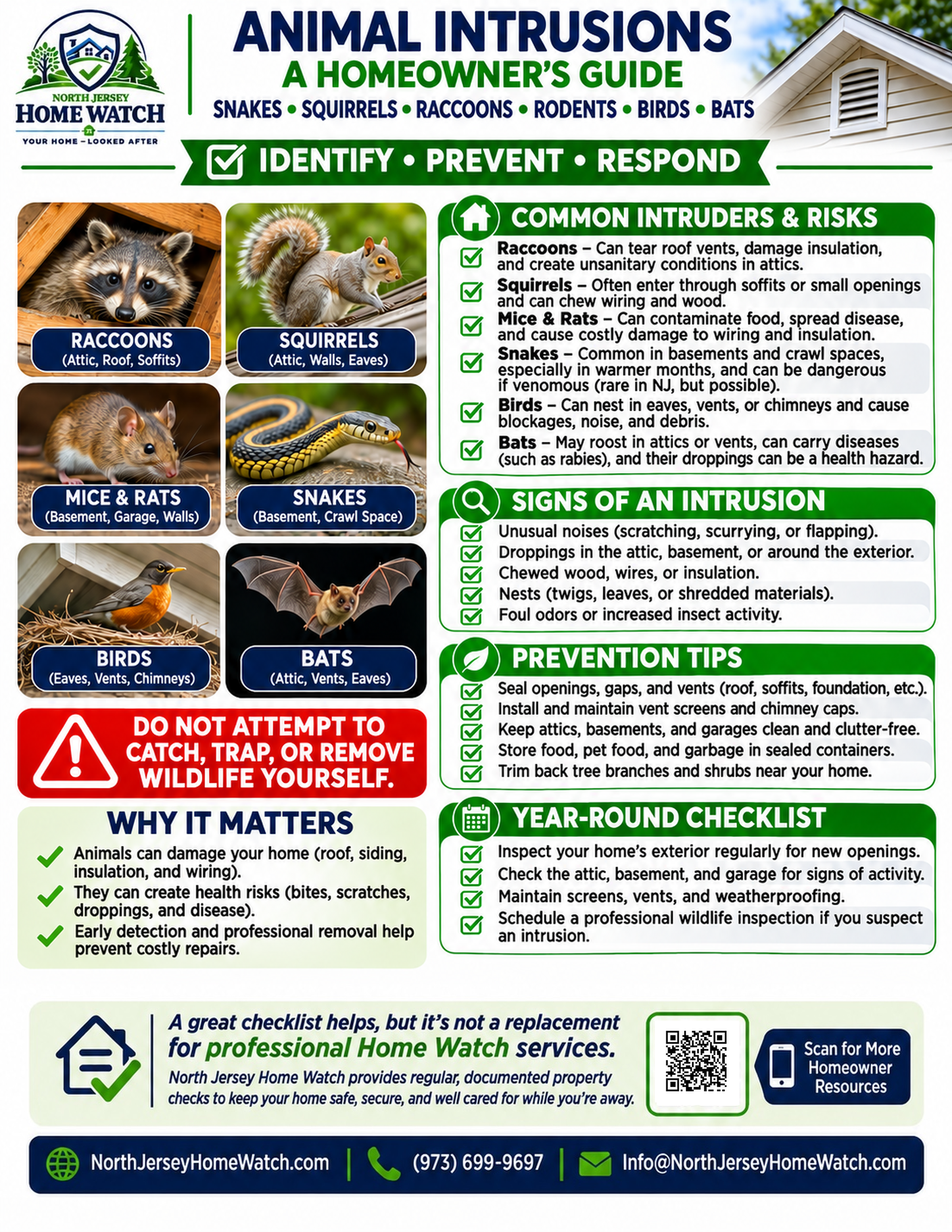
For many homeowners in North New Jersey, the change of seasons brings a quiet beauty to our wooded neighborhoods. However, as the temperature drops or when breeding seasons begin, your home becomes the most attractive real estate in the county for local wildlife. When you are living in the house full-time, you might notice the faint scratching in the attic or the strange smell in the mudroom immediately. But for those who travel frequently or maintain a seasonal residence, a small intrusion can quickly escalate into a catastrophic repair bill. We often hear from clients asking, "How do I know if wild animals are getting into my home, what damage can they cause, and what can I do to prevent them?" Understanding these risks is the first step in safeguarding your investment.
Wildlife does not need an open door to enter your residence. A mouse can squeeze through a hole the size of a dime; a squirrel can chew through a rotted fascia board in a single afternoon. In the dense suburban and rural pockets of North Jersey, we share our environment with clever opportunists like raccoons, opossums, flying squirrels, and bats. When a home sits empty, these creatures sense the lack of activity. Without the vibration of footsteps or the sound of a television, they feel emboldened to turn your insulation into a nursery. The silence of a vacation home is an invitation for trouble.
Identifying the Signs of Wildlife Intrusion
If you are visiting your property after a period of absence, your senses are your best diagnostic tools. The first thing you should do is pause at the threshold and breathe in. Wildlife leaves behind a distinct, musky odor that permeates drywall and upholstery. A sharp, ammonia-like scent usually indicates a significant rodent or bat colony, as their waste accumulates quickly in confined spaces. If the air feels heavy or smells like rot, you may already have a situation that requires professional remediation.
Next, perform a visual sweep of the floors and countertops. Droppings are the most obvious calling card. Mouse droppings look like small grains of black rice, while raccoon latrines—often found in attics or near entry points—are much larger and pose significant health risks due to parasites. Look for "rub marks" along baseboards. Animals like rats and squirrels have oily fur; as they travel the same paths repeatedly, they leave dark, greasy stains on your paint.
Do not forget to look up. Check your ceilings for mysterious water spots. While your first instinct might be to call a plumber, these stains are often caused by animal urine pooling above the ceiling tiles or drywall. If you hear scratching, thumping, or scurrying during the day, you likely have squirrels. If those sounds only occur at night, you are likely dealing with raccoons or mice. Identifying these signs early is the only way to answer the pressing question: How do I know if wild animals are getting into my home, what damage can they cause, and what can I do to prevent them?
The Costly Reality of Wildlife Damage
The damage caused by wildlife is rarely just cosmetic. It is structural, electrical, and biological. The most dangerous threat is to your electrical system. Rodents, including squirrels and mice, have incisors that never stop growing. To keep them sharp and at a manageable length, they must gnaw on hard materials. In a North Jersey attic, the easiest thing to chew is the plastic casing on your wiring. Exposed copper wires are a leading cause of residential fires, especially in homes where the power remains on while the owner is away. You might not know a wire has been stripped until you flip a switch and a short circuit occurs behind the wall.
Insulation is another primary target. Animals see your expensive fiberglass or cellulose insulation as the perfect bedding material. They don't just sit on top of it; they tunnel through it, compacting it and destroying its R-value. Furthermore, once insulation is soiled with urine and feces, it cannot be cleaned. It must be professionally removed, the area sanitized, and new material installed. This process can cost thousands of dollars, far exceeding the cost of basic preventative maintenance.
Structural integrity is also at risk. Raccoons are incredibly strong; they can tear shingles off a roof or rip a soffit vent out of the eaves to create an entry point. Once an opening exists, water follows. A small hole made by a bird or a squirrel allows rain and snow to enter your home, leading to mold growth and wood rot. By the time you return for the season, a small animal problem could have evolved into a full-scale structural renovation project. This is why we emphasize the importance of professional home watch services to catch these vulnerabilities before the weather—or the animals—do their worst.
Critical Vulnerabilities in North Jersey Homes
Every home has weak points, but certain architectural features common in our area are particularly susceptible. Gable vents are a frequent culprit. Often covered with nothing more than a thin plastic screen, they are easily breached by a determined raccoon. Chimneys are another favorite entry point. Without a heavy-duty steel chimney cap, your flue becomes a hollow tree for chimney swifts or a highway into your basement for a wandering opossum.
We also see significant issues with ground-level entries. Decks and porches that are not properly screened with hardware cloth provide a sheltered space for skunks and groundhogs to burrow. Once they are under the porch, it is only a short distance to the foundation walls. If there are any cracks in your masonry or gaps where utility lines enter the house, these animals will find them. They are experts at identifying the path of least resistance.
How Do I Know if Wild Animals Are Getting Into My Home, What Damage Can They Cause, and What Can I Do to Prevent Them?
Prevention is a multi-layered strategy that involves hardening your home's exterior and removing the incentives for animals to visit. Start by walking the perimeter of your property. Look for overhanging tree branches. Squirrels and raccoons use these as bridges to reach your roof. Ensure all branches are trimmed at least ten feet away from the house line. If they can’t jump to the roof, they are much less likely to investigate your shingles.
Secure your trash and eliminate food sources. In North Jersey, we have a robust bear population alongside smaller critters. If you leave bird feeders out or fail to secure your garbage cans, you are ringing a dinner bell for every animal in the woods. Once they associate your property with food, they will naturally look for a place to sleep nearby—which usually means your crawlspace or attic.
Inside the home, focus on sealing the envelope. Use steel wool or copper mesh to fill small gaps around pipe penetrations, as rodents cannot chew through these materials. Install high-quality, metal vent covers over all exhaust ports. Most importantly, maintain a consistent schedule of inspections. The longer an animal stays in your home, the more "territorial" it becomes, making removal more difficult and expensive. For homeowners who spend significant time away, having a local partner to perform regular walkthroughs is the most effective way to address the concern: How do I know if wild animals are getting into my home, what damage can they cause, and what can I do to prevent them?
The Role of Professional Oversight
Many people believe that a security camera or a smart thermostat is enough to monitor their home. While technology is helpful, a camera cannot smell a dead rodent in the wall or see the chew marks on the back of a wooden soffit. A comprehensive home watch service provides the physical presence necessary to spot the subtle changes that signify an intrusion. We check for the small piles of sawdust that indicate a carpenter bee or a woodpecker, the displaced attic insulation, and the tiny droppings in the basement that indicate a breach in the foundation.
When I identify a problem, I act as your boots on the ground. I can coordinate with specialized wildlife removal professionals who use humane trapping and exclusion techniques. These experts don't just remove the animal; they identify the exact entry point and seal it so the problem doesn't recur. Dealing with wildlife requires a proactive mindset. Waiting until you return to North Jersey to find a family of raccoons in your master bedroom is a recipe for stress and financial loss.
Protecting Your Peace of Mind
Ultimately, your home should be a place of sanctuary, not a habitat for local fauna. By understanding the signs of intrusion—from odd smells to structural breaches—and taking concrete steps to harden your property, you can significantly reduce your risk. Trimming trees, capping chimneys, and securing food sources are simple tasks that pay huge dividends in property preservation.
If you are planning to be away from your North Jersey residence, don't leave its safety to chance. I specialize in identifying the early warning signs of wildlife damage and ensuring your property remains secure and well-maintained in your absence. To learn more about how I can protect your investment, schedule a consultation with me today. I provide the professional eyes and ears you need when you can't be there yourself.
Have more questions? View our full FAQ page
Questions, answered.
What is the most common way animals enter North Jersey homes?
Most wildlife enters through vulnerabilities in the roofline, such as damaged soffits, uncapped chimneys, or rotted fascia boards. Small rodents frequently use gaps around utility pipes and foundation cracks. Animals are opportunistic and will exploit any opening where they feel warmth or hear the absence of human activity.
Will my homeowners insurance cover damage caused by wild animals?
Standard homeowners insurance policies often exclude damage caused by rodents, birds, or vermin, as these are considered maintenance issues. However, damage from larger animals like bears or sudden events like a fire caused by chewed wiring might be covered. It is crucial to prevent these issues through regular inspections.
How often should I have my home checked for wildlife while I am away?
We recommend a professional walkthrough at least once every two weeks. This frequency allows for the early detection of entry points or droppings before an animal can establish a nest, cause significant structural damage, or create a biohazard situation that requires expensive professional remediation.