
How do I know if my basement sump pump and backup systems are working properly, and how can I prevent basement flooding?
Learn how do I know if my basement sump pump and backup systems are working properly, and how can I prevent basement flooding while away from NJ Home
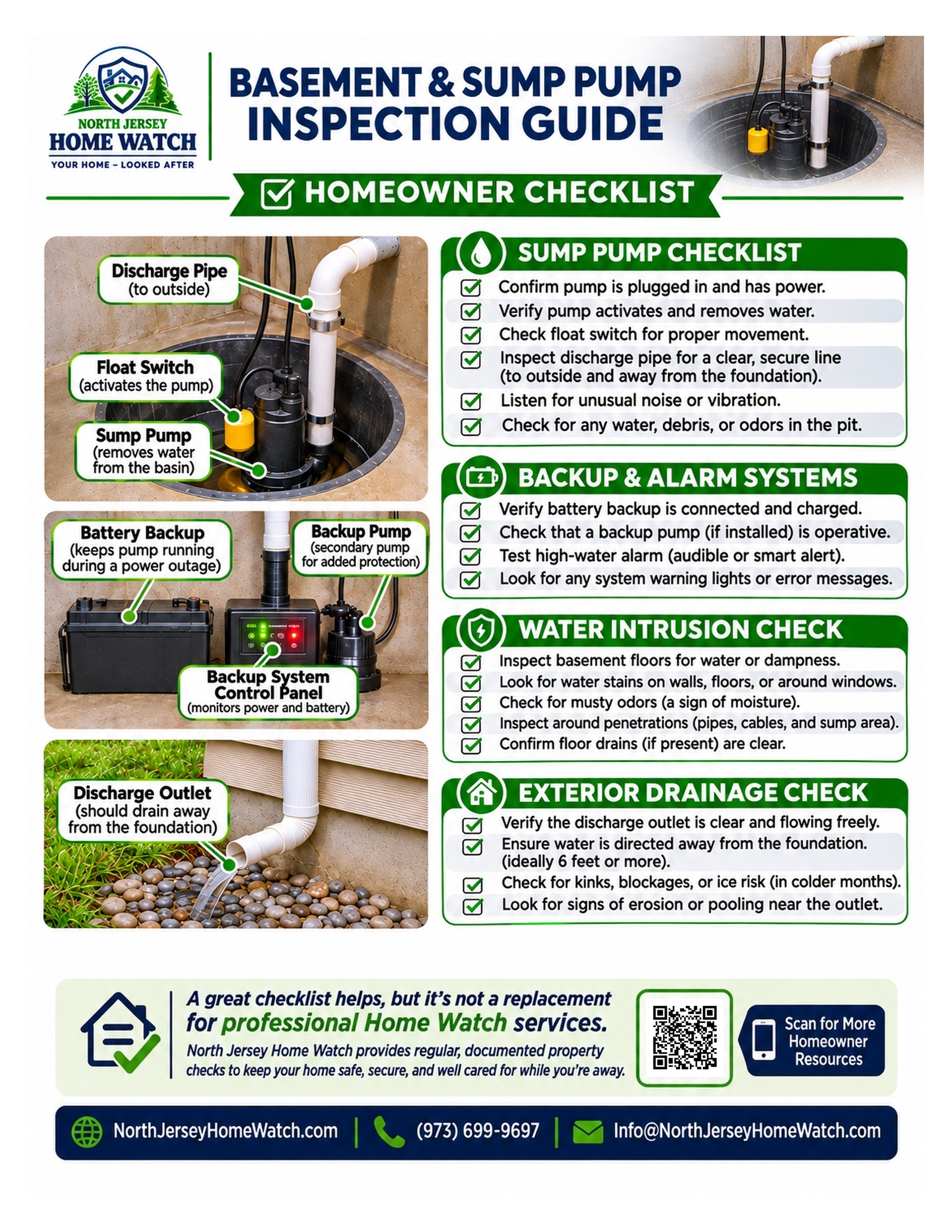
For many homeowners in North New Jersey, the basement is more than just a storage space or a utility room; it is the foundation of the home's structural integrity. However, because our region experiences heavy seasonal rains and rapid snowmelts, that foundation is constantly under threat from hydrostatic pressure. Most residents rely on a single mechanical device to keep their lower levels dry. Yet, the question we most frequently hear from clients who travel is: How do I know if my basement sump pump and backup systems are working properly, and how can I prevent basement flooding? It is a vital question because a sump pump is a mechanical device with a 100% failure rate over a long enough timeline. Simply having one installed is not a strategy; verifying its operation and the integrity of its backup systems is the only way to ensure your property remains protected while you are away.
At North Jersey Home Watch, I have seen firsthand what happens when a float switch sticks or a discharge line freezes during a cold snap. A dry basement can become a multi-thousand-dollar remediation project in a matter of hours. This guide breaks down the technical specifics of testing your equipment and the preventative measures necessary to safeguard your investment.
The Anatomy of a Reliable Sump System
A standard sump pump is a relatively simple machine. It sits in a basin, known as a crock, at the lowest point of your basement. When water levels rise, a float switch rises with it, eventually triggering the motor to pump water out of the house. However, relying on a single AC-powered pump is a gamble. In North New Jersey, severe storms that bring the most rain are also the most likely to cause power outages. Without electricity, your primary pump is useless. This is why a comprehensive system must include a secondary backup pump, usually powered by a dedicated deep-cycle battery or water pressure.
Beyond the pumps themselves, the check valve—a one-way flap in the discharge pipe—prevents water from flowing back into the pit after the pump stops. If this valve fails, your pump will work twice as hard, cycling frequently and burning out the motor prematurely. Furthermore, the exterior discharge line must be clear of debris and positioned to move water away from the foundation. If any single part of this chain fails, the entire system fails. Understanding these components is the first step in answering the question of how to prevent basement flooding effectively.
Testing the Primary Pump
You should not wait for a thunderstorm to find out if your pump works. Testing should be performed at least once a quarter. The most effective way to test a pump is to simulate a rising water level. Remove the lid of the sump pit and slowly pour five-gallon buckets of water into the basin. Watch the float. It should move freely without hitting the sides of the pit or getting tangled in power cords. As the water reaches the trigger point, the pump should kick on with a low hum and quickly evacuate the water.
Listen for unusual noises. Grinding or loud vibrating often indicates a failing bearing or a damaged impeller. If the pump takes a long time to empty a small pit, the intake screen might be clogged with silt and gravel. This build-up is common in North Jersey homes where the surrounding soil is rocky or clay-heavy. Cleaning the pit is a messy but necessary part of maintenance. If you are uncomfortable performing these technical checks, our professional home watch services include visual inspections of these systems to ensure they haven't been compromised by debris or mechanical shifts since your last visit.
Evaluating the Backup Battery System
How do I know if my basement sump pump and backup systems are working properly, and how can I prevent basement flooding if the power goes out? This is where the backup battery system comes into play. Most modern systems have a control box with status lights. A green light usually indicates the battery is charged and the system is ready. However, lights can be deceiving. A battery might show a full charge but lack the "cranking amps" to actually turn the pump under the load of water.
To test the backup, unplug the primary pump from the wall outlet. Then, perform the bucket test again. The backup pump should engage. If it struggles or fails to start, the battery may be past its lifespan. Most lead-acid sump batteries last between three and five years. If yours is older than that, it is a ticking time bomb. We also recommend checking the terminal connections for corrosion. A small amount of white crust on the battery terminals can prevent the high current needed to start the pump during an emergency.
The Importance of the Discharge Line
Many homeowners focus entirely on the pump and ignore where the water goes. In North New Jersey, we face the unique challenge of freezing temperatures. If your discharge pipe exits the house and runs along the ground, it can become clogged with ice. When the pump tries to push water against an ice plug, the pressure can burst the pipe or burn out the pump motor.
Ensure your discharge line has a downward slope so water cannot pool and freeze. Use an "IceGuard" or similar perforated attachment near the house exit. These attachments allow water to escape through the sides if the main underground pipe is frozen or blocked. Additionally, verify that the water is being discharged at least ten feet away from your foundation. If the water simply dumps right next to the wall, it will seep back down into the soil and return to the sump pit, creating a continuous, wasteful loop that wears out your equipment.
Smart Technology and Alarms
In the modern age, there is no reason to be in the dark about your basement’s status. High-water alarms are essential. These are small sensors placed just above the point where your backup pump should kick in. If water reaches the sensor, it emits a loud siren. Even better are Wi-Fi-enabled smart sensors that send an alert to your smartphone.
When I manage a property, I look for these smart integrations. Knowing a pump has failed the moment it happens allows for an emergency plumbing intervention before the water level reaches the top of the pit. This is a critical layer in the strategy of how to prevent basement flooding. If you are away for the winter, a silent pump failure can lead to weeks of standing water, resulting in catastrophic mold growth that permeates the entire structure.
Proactive Maintenance Habits
Prevention is a habit, not a one-time event. Start by ensuring your gutters and downspouts are clear. If your gutters overflow, that water falls directly against your foundation, significantly increasing the workload on your sump pump. By directing roof water away from the house, you reduce the frequency at which your pump needs to cycle.
Check the "weep holes" in the discharge pipe. Most installers drill a small hole in the pipe just above the pump to prevent airlocks. If this hole is clogged, the pump may run, but it won't be able to push water past the trapped air. Use a small wire or paperclip to ensure this hole remains clear. Also, verify that the sump pit has a tight-fitting cover. This prevents debris from falling in and stops radon gas or excess moisture from entering your basement air.
Seasonal Considerations for North Jersey
Our local climate dictates our maintenance schedule. In the fall, falling leaves frequently clog the outdoor discharge exit. In the spring, the combination of heavy rain and melting snow creates the highest water table levels of the year. This is the time when your pump will be tested the most. Before the spring thaw, double-check that your backup system is fully operational.
If your home is a secondary residence or you travel frequently during these transitional seasons, the risk profile increases. You are not there to hear the alarm or notice the damp smell of an initial leak. Having a set protocol for checking these systems is the only way to gain true peace of mind. We often find that homeowners assume their systems are fine because they haven't heard them run, but silence can often be the first sign of a dead motor. Regular, manual triggers of the float switch are the only way to be certain.
Final Steps for Total Protection
How do I know if my basement sump pump and backup systems are working properly, and how can I prevent basement flooding? You know it by testing it, and you prevent it by building redundancy. This means having a primary pump, a battery backup, a high-water alarm, and a clear discharge path. If any of these are missing, your basement is at risk.
I specialize in the meticulous oversight required to keep these systems in check. For those who want to ensure their North Jersey home remains dry and secure regardless of the weather, we invite you to schedule a consultation with me to discuss my comprehensive property oversight and house-check protocols.
Have more questions? View our full FAQ page
Questions, answered.
How often should I replace my sump pump battery?
Most dedicated sump pump batteries last between 3 to 5 years. Even if the status light is green, the battery's ability to hold a significant charge diminishes over time. In North Jersey, where power outages from storms can last several days, we recommend proactive replacement every four years to ensure the backup system has the stamina to protect your home.
Can I use a regular car battery for my backup sump pump?
No. Sump pump backups require deep-cycle batteries (often Marine/RV grade) designed to be discharged and recharged multiple times. Standard automotive batteries are designed for a high-intensity burst to start an engine and will degrade rapidly if used in a sump system. Always use the specific battery type recommended by your pump manufacturer.
What does it mean if my sump pump is constantly running even when it isn't raining?
This could indicate a high water table typical in parts of North New Jersey, or a failed check valve. If the check valve is broken, water already in the discharge pipe flows back into the pit after the pump stops, triggering the float again. It could also mean your discharge line is broken and recycling water back into the foundation.