
How Can I Protect My Home From Water Leaks and Flooding While I'm Away?
Learn how can I protect my home from water leaks and flooding while I'm away with these expert North Jersey Home Watch tips for stress-free travel.
When North New Jersey homeowners head south for the winter or escape for a long summer holiday, the excitement of travel often eclipses the practicalities of property management. However, the question remains: How can I protect my home from water leaks and flooding while I'm away? A single failed supply line or a frozen pipe can cause tens of thousands of dollars in damage within just a few days. Water is patient, and it is persistent. Without someone on-site to intervene, a small drip becomes a deluge that saturates floorboards, ruins drywall, and invites mold to take root in the humid Jersey summers.
Protecting your investment requires a multi-layered approach. It is not enough to simply lock the door and hope for the best. You need a combination of mechanical prevention, technological monitoring, and physical oversight. Whether you live in a historic home in Montclair or a modern estate in Alpine, the risks are universal. The following guide outlines the concrete steps we recommend to our clients to ensure they return to a dry, safe home.
The Primary Defense Main Water Shutoff
The most effective answer to the question "How can I protect my home from water leaks and flooding while I'm away" is the simplest: turn off the main water supply. If there is no pressure in the pipes, a leak cannot occur in the majority of your plumbing system. Locate your main shutoff valve, typically found in the basement or a utility closet where the water line enters the house. Turn it to the 'off' position and then open the highest and lowest faucets in the house to drain the remaining water from the lines. This depressurizes the system and removes the fuel for a potential flood.
However, this is not always a viable option for everyone. If you have a fire sprinkler system, it often shares a line with the domestic water; shutting it off could deactivate your fire protection. Similarly, some heating systems in North New Jersey require a constant water feed to operate safely during the winter. If you cannot shut off the main valve, you must focus on secondary points of failure. Shut off the individual valves leading to toilets, sinks, and specifically the washing machine. Rubber washing machine hoses are notorious for bursting under constant pressure when they are not in use.
Addressing Seasonal Risks in North New Jersey
Our climate presents unique challenges. In the winter, the threat is freezing. Even if you leave your heat on, a power outage during a Nor'easter can cause interior temperatures to plummet. If pipes are located in exterior walls or uninsulated crawlspaces, they will freeze and crack. To mitigate this, we advise clients to keep cabinet doors open under sinks to allow warm air to circulate around the plumbing.
During the summer months, the threat shifts to humidity and air conditioning. In North Jersey, we experience high humidity that can lead to condensation issues. If your A/C condensate line clogs—often due to algae growth—the water will back up and overflow the drain pan. This often happens in attics, leading to water dripping through the ceiling of the floor below. We recommend having your HVAC system serviced before any long vacancy and ensuring that a float switch is installed; this device automatically shuts off the cooling system if it detects a backup in the drain line.
Leveraging Smart Technology and Leak Detection
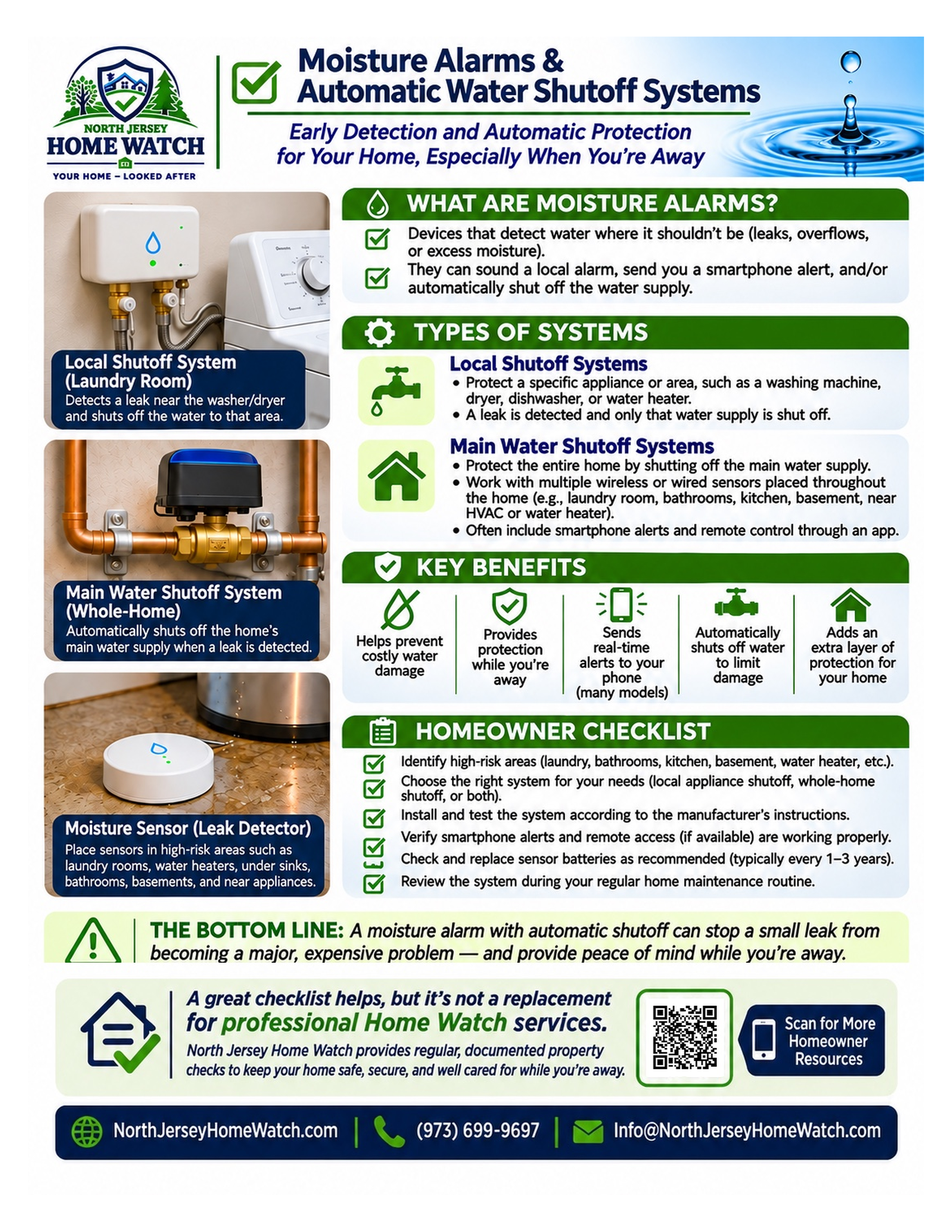
Modern technology has provided homeowners with incredible tools to monitor their property remotely. Smart leak detectors are small, battery-operated sensors that you place in high-risk areas: under the kitchen sink, behind the refrigerator's icemaker, near the water heater, and in the laundry room. These devices connect to your home Wi-Fi and send an immediate alert to your smartphone the moment they detect moisture.
For those seeking the highest level of protection, automatic shutoff valves like the Flo by Moen or Phyn are excellent investments. These systems are installed on the main water line and use ultrasonic sensors to monitor water flow. If they detect an unusual flow pattern consistent with a leak, they can automatically close the main valve and notify you. While these tools are powerful, they are not infallible. Wi-Fi can go down, batteries can die, and mechanical valves can occasionally jam. This is why technology should be seen as a supplement to, rather than a replacement for, professional home watch services.
The Critical Role of Exterior Maintenance
Not all flooding comes from inside the pipes. In our region, heavy rain and rapid snowmelt are frequent culprits of basement flooding. Before you leave, inspect your gutters and downspouts. If they are clogged with leaves from our many oak and maple trees, water will spill over the side and pool at your foundation. This is a direct recipe for a wet basement. Ensure your downspout extensions carry water at least six to ten feet away from the house.
Next, consider your sump pump. If your home relies on one, it is the heartbeat of your basement’s flood defense. Test it by pouring a bucket of water into the pit to ensure the float switch triggers the pump. More importantly, ensure you have a battery backup system. Severe storms often knock out power in North Jersey, and a sump pump without power is merely a hole in the floor. A water-powered backup pump is another excellent option for those on municipal water, as it requires no electricity at all.
The Value of Physical Property Inspections
Technology can tell you that a leak has occurred, but it cannot see the water stains forming on a ceiling from a failing roof shingle or hear the humming of a pump that is about to fail. This is where a dedicated home watch professional becomes indispensable. When we visit a property, we perform a systematic walkthrough. We check the mechanical room, look for signs of pest intrusion that might have chewed through PEX piping, and verify that the water heater isn't weeping at the base.
How can I protect my home from water leaks and flooding while I'm away? By having a boots-on-the-ground advocate. If a leak is discovered, we act as your local point of contact, capable of shutting off the water immediately and coordinating with trusted local plumbers to begin repairs before the damage escalates. We provide the visual confirmation that your home remains in the state you left it, offering a level of detail that a sensor simply cannot match.
Final Checklist Before Departure
Before you head out for your next trip, run through this final checklist to ensure your plumbing is secure. Check the age of your water heater; if it is over ten years old, it is at a significantly higher risk of a tank failure. Clear any debris from window wells to prevent water from shattering the glass during a heavy downpour. Finally, ensure your neighbors or your home watch team know where your main shutoff is located. Every minute matters when water is flowing.
By combining these mechanical steps with consistent monitoring, you can travel with the peace of mind that your North Jersey residence is protected. Water damage is costly, disruptive, and often preventable with a little foresight and a proactive plan. Do not wait for a disaster to occur before you consider the vulnerabilities of your home's plumbing and drainage systems.
If you want to ensure your property remains in pristine condition during your next absence, we are here to help. Our team provides the specialized oversight needed to catch issues before they turn into catastrophes. To learn more about our customized inspection plans, schedule a consultation with us today.
Have more questions? View our full FAQ page
Questions, answered.
Is it really necessary to turn off my water for a short one-week trip?
Yes, we highly recommend it. A pipe can burst at any time, and even a small leak can cause significant damage in just 24 hours. If you are away for a week, a burst pipe could result in thousands of gallons of water flooding your home before you return. Shutting off the main valve if possible is a 30-second task that provides total peace of mind.
What is the best way to prevent frozen pipes in North New Jersey?
Keep your thermostat set to at least 55-60 degrees Fahrenheit. Open cabinet doors under sinks to allow warm air to reach the pipes. Additionally, ensure your home watch professional checks that the furnace is running during every visit, especially during sub-zero cold snaps common in our area.
Will my insurance cover water damage if I am away for an extended period?
Most homeowner insurance policies require that you maintain heat in the building or shut off the water supply and drain the systems while the home is vacant. Some policies also require regular inspections. Failing to show 'due diligence' in protecting your home while away can lead to a denied claim, which is why professional home watch documentation is so valuable.