
How can I protect my home from roof, gutter, and drainage problems while I'm away?
How can I protect my home from roof, gutter, and drainage problems while I'm away? Learn how North New Jersey homeowners can prevent costly water damage.
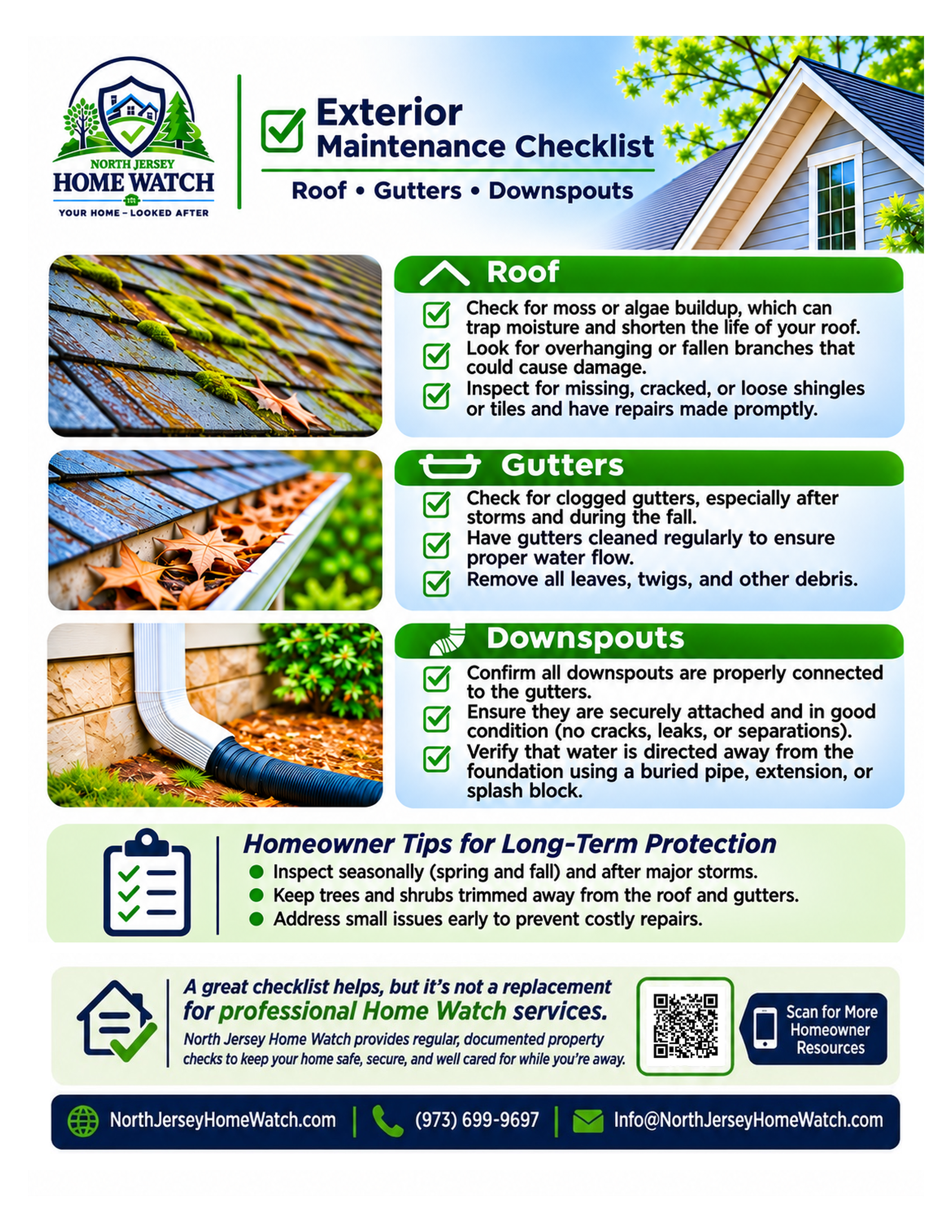
North New Jersey weather is famously unpredictable. From heavy autumn rains to the weight of mid-winter snow and the sudden downpours of spring, your home's exterior takes a constant beating. For homeowners who travel frequently or maintain a seasonal residence, the concern is always the same: How can I protect my home from roof, gutter, and drainage problems while I'm away? The answer lies in a proactive, layered defense strategy that addresses vulnerabilities before they escalate into structural catastrophes.
Water is the single most destructive force a home faces. When you are present, a small leak or a clogged downspout is an annoyance you spot while walking to the mailbox. When you are away for weeks or months, that same minor issue becomes a slow-motion disaster. A single missing shingle can lead to a rotted roof deck, mold in the attic, and ruined drywall in a master bedroom. In our region, where mature oak and maple trees are abundant, the risk of drainage failure is particularly high. We have seen firsthand how a few handfuls of debris can redirect thousands of gallons of water directly into a foundation.
The Roof as Your First Line of Defense
Your roof is a complex system designed to shed water efficiently. However, it only works when every component is intact. When we perform inspections for our clients, we start by looking for the obvious signs of wear that are often missed from the ground. How can I protect my home from roof, gutter, and drainage problems while I'm away? It starts with a close-up evaluation of your shingles. We look for cracked, curled, or missing pieces. Even one missing shingle creates an entry point for water that can travel along rafters, making the eventual leak appear far from the actual source of the problem.
Moss and lichen are another localized concern in North New Jersey. Because many of our homes are nestled in wooded areas, shade creates the perfect environment for these organisms to thrive. Moss acts like a sponge, holding moisture against the shingle surface and eventually lifting the edges, which allows water to seep underneath. If you notice green patches on your roof before you leave, it is vital to have them treated. Furthermore, overhanging branches are a primary threat. During a North Jersey windstorm, those branches act like sandpaper against your roof or, worse, can snap and puncture the surface. Trimming trees back at least ten feet from the roofline is a non-negotiable step in vacation home prep.
Maintaining the Gutter System
If the roof sheds the water, the gutters are the highways that carry it away. In towns like Montclair, Ridgewood, or Saddle River, the high density of old-growth trees means gutters can fill up in a single weekend. Keeping gutters clean and free of leaves and debris is the most cost-effective way to prevent basement flooding. When gutters clog, water backs up under the roof eaves, leading to ice dams in the winter or rotted fascia boards in the summer.
We recommend a three-step gutter check before any extended absence. First, ensure the troughs are physically cleared of all organic matter. Second, check the pitch; gutters must lean slightly toward the downspouts to ensure water doesn't pool and become a breeding ground for mosquitoes or a weight strain on the hardware. Third, inspect the joints and seams. Leaking corners might seem minor, but that dripping water will eventually erode the soil and crack the pavement or foundation below. Using professional home watch services ensures that these systems are monitored even after a major storm rolls through, giving you peace of mind that a sudden leaf-fall hasn't compromised your drainage.
Downspouts and Foundation Drainage
Many homeowners focus so much on the roof that they forget where the water actually ends up. The goal is to move water at least five to ten feet away from the home's foundation. In North New Jersey, where clay-heavy soils are common, water that pools near the house doesn't drain quickly. Instead, it creates hydrostatic pressure against the foundation walls, eventually causing cracks and seepage.
Ensure your downspout extensions are firmly attached and directed toward a downward slope. If you have underground drainage pipes (often called bubblers or French drains), verify they aren't obstructed by silt or rodent nests. How can I protect my home from roof, gutter, and drainage problems while I'm away? By ensuring that the path of least resistance for water is always away from your basement. If you are leaving for the winter, ensure that these extensions won't be blocked by snow piles created by a plow service, as this is a frequent cause of mid-winter basement flooding.
The Role of Professional Oversight
Preparation is only half the battle. The reality of home ownership is that things change the moment you pull out of the driveway. A storm can blow a branch down, a heavy rain can wash new debris into a clean gutter, or a squirrel can decide your chimney flashing is a great place to store nuts. This is why visual inspections during your absence are critical. A home watch professional doesn't just look at the house; they look for the subtle changes that indicate a system failure.
I look for water staining on the soffits, sagging gutters, and new damp spots in the basement. We check the attic for the smell of moisture or visible light peeking through the roof boards. These are the details that prevent a $500 repair from becoming a $50,000 insurance claim. When you ask, "How can I protect my home from roof, gutter, and drainage problems while I'm away?", you are really asking how to maintain the integrity of your largest investment. The answer is a combination of rigorous pre-departure maintenance and consistent, professional monitoring while you are gone.
Preventing Interior Damage from Exterior Failures
It is important to understand the correlation between exterior maintenance and interior health. When a gutter fails, the water often finds its way into the wall cavities. Because modern homes are tightly sealed for energy efficiency, once moisture gets in, it stays there. This leads to hidden mold growth that can affect air quality and require extensive remediation. By keeping the exterior drainage systems clear, you are directly protecting your interior paint, flooring, and air quality.
Before you head out for your next trip, take a walk around your perimeter. Look for "splash back" marks on your siding—these are dirty spots that indicate water is overflowing from the gutters above rather than going down the spout. Check the grading of your mulch beds; they should never slope toward the house. These small observations are the hallmarks of a homeowner who understands the mechanics of their property. How can I protect my home from roof, gutter, and drainage problems while I'm away? You do it by being observant today so you don't have to be stressed tomorrow.
A Final Checklist for the North Jersey Homeowner
To summarize your defense strategy, follow this checklist before your next departure:
- Schedule a professional gutter cleaning every year.
- Have a roofer or home watch professional check for loose flashing around chimneys and vents.
- Ensure all downspout extensions are clear and pointed away from the house.
- Trim any branches that are touching or hanging over the roofline.
- Verify that your sump pump is operational if your exterior drainage relies on an interior pit.
- Arrange for a Home Watch professional to walk the property after any wind or rain event exceeding one inch.
Taking these steps ensures that your return to North New Jersey is a happy one, free from the unwelcome surprise of water damage. If you want the security of knowing your home is being watched by professionals who know exactly what to look for, we are here to help. I provide the detailed, localized expertise required to navigate our unique climate and terrain. To learn more about how we can safeguard your property, please schedule a consultation.
Have more questions? View our full FAQ page
Questions, answered.
How often should I have my gutters cleaned in North New Jersey?
In North New Jersey, we recommend cleaning gutters twice a year: once in late spring after oak tassels and seeds fall, and again in late autumn after the leaves are down. If your property has heavy evergreen or pine cover, you may need a third cleaning in mid-summer to prevent needle buildup.
Can I just install gutter guards to avoid maintenance while I'm away?
Gutter guards can reduce the frequency of cleaning, but they are not maintenance-free. Small debris like pine needles or maple 'helicopters' can still clog the mesh, and moss can grow on top of the guards themselves. Even with guards, you should have your drainage system visually inspected at least once a season.
What are the first signs of roof damage I should look for?
Look for granules from shingles collecting in your gutters, which indicates the shingles are reaching the end of their life. On the roof itself, watch for 'cupping' where the edges of shingles curl upward, or dark streaks which indicate algae growth that can trap moisture and damage the granules.