
Protecting Your North New Jersey Property: Electrical and Safety Prep
Wondering how can I make sure my home's electrical systems and safety devices are working properly? Follow our guide for North New Jersey vacation homes.
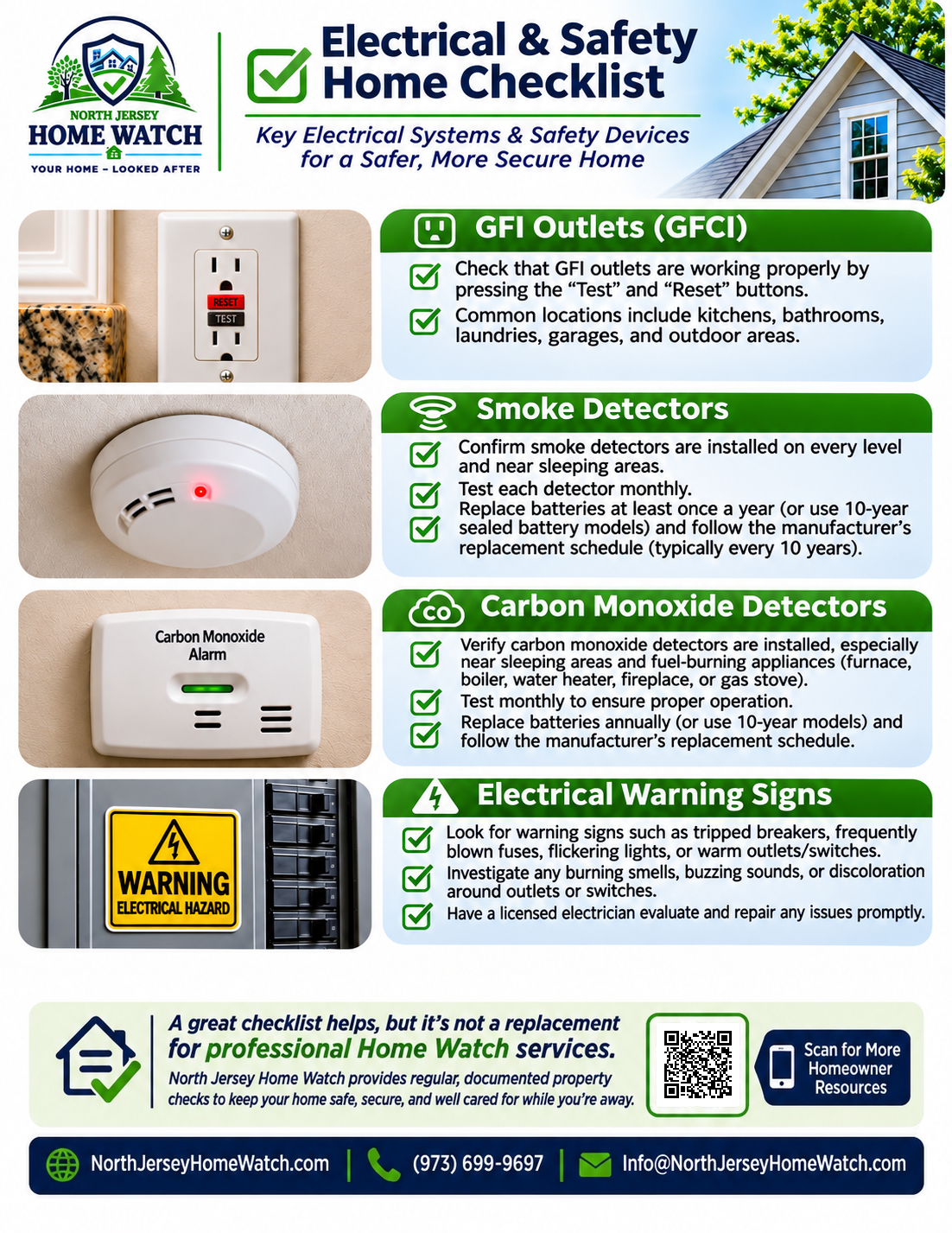
For many homeowners in North New Jersey, the seasonal transition means heading to a second property or taking extended trips. However, leaving a residence unoccupied introduces unique risks that often go unnoticed until it is too late. A common concern we hear from clients is: "How can I make sure my home's electrical systems and safety devices are working properly?" In our region, where humidity, salt air near the shore, and freezing winters can all impact wiring and sensors, a passive approach to safety simply is not enough. Proper maintenance is the bedrock of property preservation.
Electrical failures are a leading cause of residential fires, and safety devices like smoke and carbon monoxide detectors are the last line of defense. When a home is empty, these systems must be in peak condition because there is no one there to smell smoke or hear a faint chirping sound from a dying battery. This guide provides a comprehensive roadmap for securing your North Jersey home before you turn the key and head out for the season.
Establishing an Electrical Baseline
The first step in answering how can I make sure my home's electrical systems and safety devices are working properly involves a physical audit of your electrical panel. This is the heart of your home. Open the door to your breaker box and look for signs of overheating, such as charred plastic or discoloration on the switches. In older North New Jersey homes, especially those in historic areas like Montclair or Ridgewood, panels may be outdated. If you see a Federal Pacific or Zinsco brand panel, these are known fire hazards and should be replaced by a licensed professional.
Label every breaker clearly. If a pipe bursts or an appliance shorts out, you or your home watch professional needs to know exactly which switch kills the power to that specific zone. Beyond the panel, walk through every room and look for overloaded outlets. Power strips are convenient but should never be used for heavy appliances like space heaters or portable air conditioners. Unplug anything that is not essential for the home's operation while you are away. This reduces the risk of a power surge damaging sensitive electronics and eliminates phantom energy draws.
Testing Life Safety Devices
Smoke and carbon monoxide (CO) detectors are non-negotiable. If you are asking how can I make sure my home's electrical systems and safety devices are working properly, you must start with the "push-to-test" button. However, testing the button only tells you the battery and horn work; it does not necessarily mean the sensor is clean. Use a vacuum or a can of compressed air to blow out dust from the vents of these devices. Dust accumulation is a frequent cause of false alarms, which can result in unnecessary emergency dispatches when you are miles away.
In North New Jersey, CO levels can rise if a furnace or water heater malfunctions during a cold snap. Ensure you have CO detectors on every level of the home and within ten feet of every sleeping area. If your devices are more than ten years old for smoke detectors or five to seven years for CO detectors, they have reached the end of their functional life. Replace them with sealed 10-year battery units. This eliminates the need for annual battery swaps and provides peace of mind that the device will remain active throughout your absence.
The Role of GFCI and AFCI Protection
Ground Fault Circuit Interrupters (GFCIs) are designed to protect people from electric shock in areas where water is present, such as kitchens, bathrooms, and garages. Arc Fault Circuit Interrupters (AFCIs) are designed to detect dangerous electrical arcs that could cause a fire. To ensure these are functional, press the "Test" button on each outlet. The "Reset" button should pop out, and the power to that outlet should cut immediately.
If the reset button does not pop, the internal mechanism has failed. This is a critical safety issue. Given the humidity levels in North New Jersey, these components can corrode over time. Integrating these checks into your routine is essential. If you find the process overwhelming, our professional home watch services include visual inspections of these critical components to ensure your home remains safe while you are away.
Evaluating Exterior and Security Lighting
External safety is just as important as internal systems. How can I make sure my home's electrical systems and safety devices are working properly if the exterior is in the dark? Walk the perimeter of your property. Ensure that motion-activated lights are positioned to cover entry points. Check for exposed wiring on outdoor fixtures that may have been damaged by local wildlife or harsh weather.
Consider upgrading to smart lighting or high-quality timers. A dark house is a beacon for intruders, but a house where lights stay on 24/7 is equally suspicious. Using programmable switches that mimic organic activity is a far better strategy for the North Jersey homeowner. Check the seals on outdoor outlet covers to ensure they are watertight, preventing rain or melting snow from causing a short circuit that could trip a main breaker and shut down your HVAC system.
Surge Protection and Sensitive Equipment
New Jersey is no stranger to summer thunderstorms and winter ice storms, both of which can cause significant power fluctuations. A single surge can fry the motherboards in your refrigerator, oven, and HVAC controller. While individual surge protector strips are a start, a whole-house surge protector installed at the main panel is the gold standard.
When you ask, how can I make sure my home's electrical systems and safety devices are working properly, you must account for these invisible threats. A whole-house protector acts as a shield, shunting excess voltage to the ground before it enters your home's internal wiring. This is especially vital for North Jersey residents who have invested in high-end smart home systems or sophisticated security cameras that require consistent, clean power to function.
The Importance of Professional Inspections
While a DIY checklist is valuable, some tasks require a trained eye. We recommend having a licensed electrician perform an infrared thermography scan of your panel every few years. This technology identifies "hot spots" that are invisible to the naked eye but indicate a loose connection or a failing breaker. In the context of vacation home prep, this is one of the most proactive steps you can take.
If your property features a sump pump, this is another critical electrical device that needs testing. Pour water into the pit to ensure the float switch triggers the motor. A failed sump pump during a heavy North Jersey rainstorm leads to flooded basements and catastrophic mold growth. Battery backups for these pumps should be tested annually to ensure that even if the power goes out, your basement stays dry. When you wonder how can I make sure my home's electrical systems and safety devices are working properly, don't overlook the devices that protect your home's foundation.
Creating a Departure Checklist
Before you leave for an extended period, create a final walkthrough protocol. This ensures no small detail is missed.
- Unplug small appliances like toasters, coffee makers, and lamps.
- Verify that the main water valve is closed (unless you have a steam boiler).
- Confirm all smoke detectors are clear of obstructions.
- Check that your security system's backup battery is charged.
- Ensure the thermostat is set to a safe range to prevent pipe freezes (typically 55-60 degrees).
Having a structured approach is the only way to truly answer the question: how can I make sure my home's electrical systems and safety devices are working properly? It moves you from a state of worry to a state of prepared confidence. You can enjoy your time away knowing that you have mitigated the most common risks associated with unoccupied properties.
Monitoring During Your Absence
Preparation is half the battle; the other half is consistent monitoring. Even the best-prepared home can experience a failure due to unforeseen external factors like a downed utility pole or a pest infestation. This is where a professional eye becomes invaluable. A home watch professional can check for tripped breakers, listen for alarm sirens, and verify that your climate control systems are still receiving power.
For residents in Bergen, Morris, Hudson, Essex or Passaic counties, local weather can be unpredictable. A sudden power outage followed by a deep freeze can cause a home to deteriorate rapidly. Regular visits ensure that any electrical or safety device failure is caught in days, not months.
If you are ready to secure your property with a team that understands the nuances of North Jersey homes, schedule a consultation with us today. We can help you build a custom checklist and provide the ongoing oversight your investment deserves.
Have more questions? View our full FAQ page
Questions, answered.
How can I make sure my home's electrical systems and safety devices are working properly before leaving?
Start by testing all GFCI outlets and smoke detectors using their built-in test buttons. Visually inspect your electrical panel for signs of heat or damage, and unplug non-essential appliances to prevent surge damage. For a comprehensive check, hire a professional to perform an infrared scan of your panel to identify hidden loose connections or overheating breakers.
What are the most common electrical risks for unoccupied homes in New Jersey?
The most frequent risks include power surges from storms, sump pump failures during heavy rain, and battery depletion in safety sensors. In North Jersey, fluctuating temperatures can also stress older wiring and cause insulation to become brittle. Ensuring your home has a whole-house surge protector and a functional sump pump battery backup is critical for long-term vacancy.
How often should I replace smoke and carbon monoxide detectors in my home?
Smoke detectors should be replaced every 10 years, while carbon monoxide detectors usually last 5 to 7 years. Because vacation homes are often empty, we recommend installing 10-year sealed battery units. This prevents the unit from failing due to a dead battery while you are away and ensures the sensors remain active without constant maintenance.